Mailchimp
Not subscribed to OpsMatters Newsletter


Last month, on December 8, we hosted a webinar alongside Bluecore CISO Brent Lassi to discuss data security risks facing high-growth organizations like his on SaaS systems like Slack. With 2022 just beginning, we wanted to share 5 important lessons about Slack and SaaS security that are worth keeping in mind this year.
In October 2021, the IT systems of the Israeli healthcare system suffered a ransomware attack from which it took weeks to recover. Although the motive for the cyberattack on this occasion was not geopolitical but financial, government sources said they feared that far more dangerous incidents against this sector could be carried out by groups linked to foreign powers such as Iran.
This blog was written by an independent guest blogger. Technology in healthcare has the potential to make all the difference in terms of safety outcomes. Right now, modern tech is pushing the envelope of what is possible in the doctor’s office and the patient’s home, as telehealth and artificial intelligence transform the landscape of medical care. But technology isn’t always safe.
Development teams are frequently under the gun to deliver software quickly, which is difficult to do without modern tools to build, test, and deploy applications efficiently. That’s why Atlassian’s Bitbucket Cloud — a Git-based source code repository service in the cloud that streamlines software development for collaborative teams — was built for both speed and efficiency. The challenge nearly all organizations face is ensuring development speed and security at the same time.
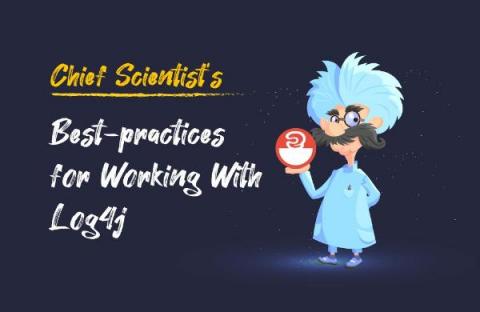
No matter your role in tech, you’ve probably already heard about, or dealt with, the ubiquitous Log4Shell vulnerability impacting a large number of Java applications. To help spread the latest info on this critical, zero-day vulnerability, we recently hosted a webinar to get everyone up to speed.
Evidence continues to mount that it isn’t a matter of if, but when and how an organization will be attacked. So, we are seeing Security Operations Centers (SOCs) narrow the focus of their mission to become detection and response organizations. As they look to address additional use cases, including threat detection and monitoring, investigation, incident response and hunting, data becomes incredibly more important.
Since December 10, in a span of just 20 days, there have been four different vulnerabilities published against Log4j. Engineers who worked long hours to update their Log4j versions to 2.15.0 on December 11th, were told three days later that they needed to do it all over again and upgrade to version 2.16.0. This is not sustainable. And yet the risks are high. Looking backward, we see that Log4j has been vulnerable since 2013 to the kinds of attacks described in CVE-2021-44228.
Zenity is proud to be the first and only governance and security platform for low-code/no-code applications, and of the unique path we have traveled to get here. Living and breathing technology in every aspect of our lives, we started as a small, enthusiastic team in love with the idea of application development democratization and what it takes to make sure that it is done securely.
Ransomware has quickly become one of the most prevalent cyber threats facing organizations today. Unfortunately, the cybercriminal community has latched onto this attack method because infections can quickly cause devastating damage to the victim, and strikes are incredibly easy to launch at scale. The best way to ensure that your organization does not fall victim to a ransomware attack is to understand what happens when an attacker injects this type of malware into a system.