Mailchimp
Not subscribed to OpsMatters Newsletter


Network segmentation is a practice that can dramatically lower the time, effort and cost of a PCI DSS assessment. Not only is it an industry best practice for security cardholder data, but it’s also an effective way of controlling the annual commitment of meeting your PCI compliance requirements. Here’s how network segmentation works, as well as some key best practices for using network segmentation to reduce the scope of your PCI assessment.
PCI compliance applies to businesses of all sizes: In fact, the PCI Council sets compliance standards according to how many card-based transactions a business handles each year. There are four merchant levels are Small businesses usually fall under level four. If you’re not sure what level your business falls into, your point-of-sale (POS) reports may be able to tell you.
To say that data governance and data compliance are rapidly becoming areas of immense strategic importance for businesses would be an understatement. Governments worldwide already have data protection laws in place or are busy drafting these laws. Moreover, users have become increasingly aware and educated about their rights online, especially regarding what data businesses can collect about them.
Water Sector Cybersecurity Requirements Policymakers and regulators in Washington are bringing their attention now to water utilities’ cybersecurity. Last month, the White House announced it was expanding its public-private cybersecurity partnership to the water sector. Separately, in December of 2021, the Environmental Protection Agency (EPA) announced an evaluation of regulations related to the public water system’s cybersecurity, which will change in April.
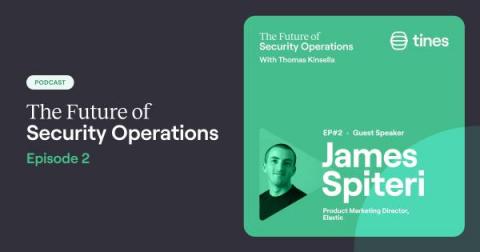
In our second episode, we speak with Elastic’s Product Marketing Director James Spiteri, an experienced security practitioner turned product marketer with a passion for making security accessible and easy for anyone and everyone.
Recently the architecture model known as Secure Access Service Edge (SASE) has been gaining momentum. Not surprising, when the model provides benefits - including reduced complexity of management, improved network performance and resiliency, security policy implemented consistently across office and remote users and lower operational expense. In fact, according to a recent ESG survey, 70% of businesses are using or considering a SASE solution.
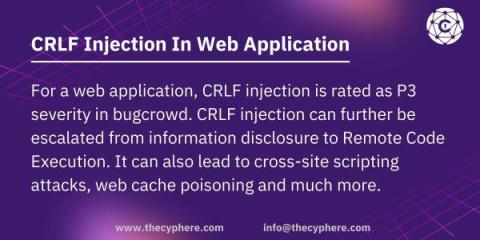
Web applications across the digital world are teeming with vulnerabilities increasingly equipped to defeat security mechanisms. Among them are injection attacks. We are aware of the many injection vulnerabilities present in a web application, for example, SQL injection, HTML injection, CRLF injection, cross-site scripting and many others. This article will discuss CRLF injection vulnerability in detail for web application security.
Cybersecurity leaders and practitioners recently gathered at Hack the Port in Ft. Lauderdale, Florida to discuss the evolving threats to ports – a key sector within the nation’s critical infrastructure – and how to better protect them.