Security | Threat Detection | Cyberattacks | DevSecOps | Compliance

Device Authority and Entrust Further Demonstrate Their Partnership Potential to Provide Security to the Supply Chain

Identified as leaders in IoT (Internet of Things) Device Identity Lifecycle Management by ABI Research, and leaders in IoT IAM according to Quadrant, Device Authority and Entrust have worked together to integrate Device Authority’s KeyScaler® IoT IAM (Identity and Access Management) platform with PKI (Public Key Infrastructure) services from Entrust, extending the existing collaboration for Hardware Security Module (HSM) services, to provide device trust, data trust and automation at IoT sca

API Security for Fintech SaaS | Getting the Most Out of a WAF | Val (Co-Founder & CTO, FISPAN)

In this podcast, Val Novikov (Co-Founder & CTO, FISPAN) talks to Venky about the API security challenges while integrating with proprietary Banking applications and ERP systems. He also discusses why Fintech SaaS start-ups require a deep investment of time, resources, and money in cyber Security right from day zero of the product development. Here are some of the key highlights from the discussion .

In the age of AI, how do you know what data to trust?

Last week, the godfather of AI, Geoffrey Hinton smashed the glass and activated the big red AI alarm button warning all of us about creating a world where we won’t “be able to know what is true anymore”. What’s happening now with everything AI makes all the other tech revolutions of the past 40 plus years seem almost trivial.

The Linux Crypto API for user applications

In this post we will explore Linux Crypto API for user applications and try to understand its pros and cons. The Linux Kernel Crypto API was introduced in October 2002. It was initially designed to satisfy internal needs, mostly for IPsec. However, in addition to the kernel itself, user space applications can benefit from it.

Modern Data Protection Safeguards for ChatGPT and Other Generative AI Applications

Co-authored by Carmine Clementelli and Jason Clark In recent times, the rise of artificial intelligence (AI) has revolutionized the way more and more corporate users interact with their daily work. Generative AI-based SaaS applications like ChatGPT have offered countless opportunities to organizations and their employees to improve business productivity, ease numerous tasks, enhance services, and assist in streamlining operations.

Netskope Demo - Safely Enable ChatGPT

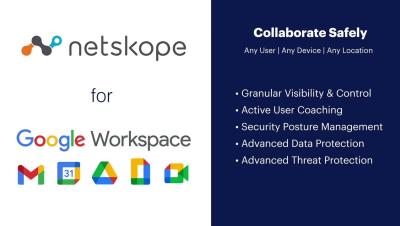
Organizations are grappling with the decision to allow or block ChatGPT given the risk of leaking sensitive data. In this video, Bob Gilbert, VP of Security Cloud GTM Strategy and Chief Evangelist, demos how Netskope solutions can help your organization enable safe usage of tools like ChatGPT with active user coaching and data protection.

More Kudos for Salt Leadership in Delivering API Security to Financial Services Firms!

The accolades continue for Salt Security! Hot on the heels of being named in Inc.’s Best Workplaces 2023, our platform has now been included in the CyberTech 100 list, which highlights the top companies in cybersecurity for financial services organizations. These company recognitions also follow a slew of recent awards for us, among them the Ally Technology Peace of Mind award presented by Ally Financial, the largest US digital-only bank and auto finance company.

Software Composition Analysis Explained

Open source code is everywhere, and it needs to be managed to mitigate security risks. Developers are tasked with creating engaging and reliable applications faster than ever. To achieve this, they rely heavily on open source code to quickly add functionality to their proprietary software. With open source code making up an estimated 60-80% of proprietary applications’ code bases, managing it has become critical to reducing an organization’s security risk.

Securing your enterprise: The importance of a security operations center

The world is increasingly embracing cloud technology. The fact that cloud requires minimal infrastructure and operational costs is attracting enterprises to shift to cloud. Remote and hybrid work modes following the pandemic has added to the continued rise of cloud.