Security | Threat Detection | Cyberattacks | DevSecOps | Compliance

Move to the Cloud with Confidence: 6 Key Risks & Mitigation Techniques - Part 2

According to Gartner, cloud spending will reach $597.3 billion by the end of 2023. Whether it’s infrastructure as a service (IaaS), a software as a service cloud application (SaaS), or some other use for the cloud, organizations are finally adopting cloud use models that help increase scalability, reliability, and speed, while reducing overhead costs.

Economic impact of automation and artificial intelligence

One of the most important technology trends in cybersecurity is AI (artificial intelligence). The idea behind AI in cybersecurity is to use AI-enabled software to augment human expertise by rapidly identifying zero day malware, APTs, malwareless attacks, or hacking attempts, reducing the organizations’ incident costs.

Cloudflare Email Security now works with CrowdStrike Falcon LogScale

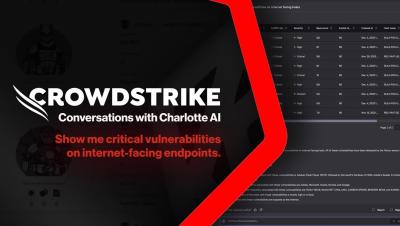
We are excited to announce an extended partnership between CrowdStrike and Cloudflare to bring together Cloudflare Email Security and CrowdStrike Falcon® LogScale. With this integration, joint customers who have both Falcon LogScale and Cloudflare Email Security can now send detection data to be ingested and displayed within their Falcon LogScale dashboard.

The world needs start-ups to meet IoT security challenges

I read this article earlier this week from Jeff Vance and I was buoyed by the refreshing reflection of reality – Jeff really hits the nail on the head. As the CEO of a cyber security start up, we see, hear, and feel these points daily and the fact is that so many larger security or network businesses claim to solve problems that they cannot. Not only is this doing a disservice to customers but to the wider security landscape. Let’s explore this further…

Evolution of Real Time Attack Detection

Attack detection is critical for most security solutions, whether we are talking about a load balancer-based (NIDS, WAF), host-based or in-application solutions (HIDS, RASP). Interestingly, regardless of the differences in architecture and data flow, most solutions use similar detection principles and techniques. We will explore how the detection architecture evolved over time and how the new generation of detection logic, such as the architecture implemented by Wallarm, is principally different from that of the legacy solutions.

Wallarm AI Engine: How It Works

The main task of the run-time application security is to protect modern applications and APIs. In this endeavor the solutions face a number of challenges: Download this whitepaper to learn how Wallarm solves the difficult task of effective application security by relying on AI and machine learning including a unique combination of hierarchical clusterization, statistical n-gram based models, recurrent neural networks and reinforcement learning.

New Acquisition Powers AI-based Network Detection and Response and Open XDR Capabilities for WatchGuard

Once integrated into the WatchGuard Unified Security Platform architecture, the CyGlass technology will deliver AI- and ML-based detection of network anomalies and accelerate Open XDR capabilities.

The confluence of cloud and AI: charting a secure path in the age of intelligent innovation

The fusion of Cloud and AI is more than just a technological advancement; it’s a paradigm shift. As businesses harness the combined power of these transformative technologies, the importance of a security-centric approach becomes increasingly evident. This exploration delves deeper into the strategic significance of navigating the Cloud-AI nexus with a focus on security and innovation.

Securing the Software Supply Chain: Key Findings From the Mend Open Source Risk Report

Open source vulnerabilities are in permanent growth mode. A significant quarterly increase in the number of malicious packages published in registries such as npm and rubygems have shown the increasing need to protect against this trending attack. At the same time, companies struggle to close the remediation gap on known vulnerable open source code. It’s all in The Mend Open Source Risk Report, which details these and other significant risks posed by the ongoing rise in open source vulnerabilities and software supply chain attacks.

AWS and Mend.io Webinar: Five Principles of Modern Application Security Programs

Organizations of all kinds are experiencing increasing volumes, frequency, and severity of cyberattacks. 71% of IT and security leaders say that their portfolio of applications has become more vulnerable in the last year alone, and cybercrime is expected to cost companies worldwide around $10.5 trillion annually by 2025. To fight this trend, organizations need a resilient AppSec strategy that can reinforce trust, reliability, and security when faced with adverse conditions.