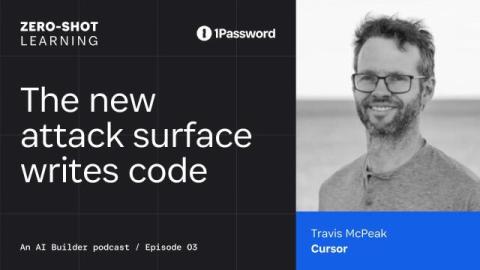
In this episode, Caleb Tolin welcomes Ojas Rege of OneTrust for a practical, wide-ranging conversation on how data privacy and governance must evolve alongside enterprise AI adoption. Ojas explains why AI fundamentally changes the privacy conversation: the same systems that enable organizations to move faster can also cause harm faster when guardrails aren’t in place. From agentic AI systems that dynamically repurpose data to general-purpose models that blur traditional notions of “intended use,” the challenge isn’t just compliance—it’s trust.
AI compliance ensures AI systems follow laws, ethics, and standards by managing risks like bias, privacy violations, and lack of transparency through robust governance, documentation, and continuous monitoring, using frameworks like the EU AI Act and NIST AI Risk Management Framework (RMF) to build trust and avoid penalties in developing, deploying, and operating AI.
AI tools are quickly becoming part of everyday business workflows. From chatbots to automation tools, large language models now handle sensitive tasks and data. But with this growth comes new security risks. One of the biggest emerging threats is the prompt injection attack, in which attackers manipulate inputs to cause AI systems to ignore their original instructions. Unlike traditional cyberattacks, this method exploits weaknesses through language rather than code.
In 2026, the digital landscape has shifted from a world of "AI assistants" to one of autonomous operators. For managed service providers (MSPs), this evolution marks the end of the traditional "land and expand" human services playbook and the beginning of a high-speed era of machine-on-machine warfare.
Predicting a market disruption is difficult, but the vast rewards of being correct make it worthwhile. Unfortunately, prediction becomes tougher when marketing teams start labelling everything as a "market disruptor". Much like the stock market, if something is being sold to you as “the investment of a lifetime”, it almost certainly is not. Yet market disruptors do exist, and the organizations that identify them enjoy generational success.
For years, the cybersecurity industry has suffered from a "data gravity" problem. Security teams are buried under billions of rows of telemetry, yet they remain starved for actionable insights. A Threat Intelligence Platform (TIP) is a centralized security system that collects, aggregates, and organizes data about known and emerging cyber threats. It serves as the vital connective tissue between raw telemetry and active defense.
Today’s threat landscape is more varied and chilling than ever: Sophisticated nation-state actors. Hyper-volumetric DDoS attacks. Deepfakes and fraudsters interviewing at your company. Even stealth attacks via trusted internal tools like Google Calendar, Dropbox, and GitHub.
Mobile app risk rarely emerges from negligence. It emerges from fragmentation. In most enterprises, security is applied in stages: Each control works in isolation. None governs how risk evolves over time. Mobile applications are distributed, long-lived systems. Once deployed, they operate outside centralized infrastructure control, exposed to shifting SDK dependencies, evolving APIs, regulatory change, and adaptive adversaries. Security gaps rarely appear within a stage. They appear in the transitions.
In Regex is (almost) All You Need, we learned that using a combination of regular expression patterns, entropy, and rule-based filters are an effective way to detect candidate secrets. Regex is used for casting a wide net to identify candidates. Entropy is used as a primary filter on the captured candidates and additional filters like presence of commonly used english words, or filtering on known “safe” files like go.sum are applied last.