Security | Threat Detection | Cyberattacks | DevSecOps | Compliance

What Is AI Asset Discovery (And Why It Matters for AI Governance)

Enterprise artificial intelligence adoption is scaling at a pace that manual inventory methods simply cannot match. This rapid proliferation has created a severe visibility chasm for security and risk teams: it is fundamentally impossible to govern, secure, or quantify what you do not know exists. ‍ To bridge this gap, organizations are shifting away from point-in-time compliance audits and adopting continuous discovery.

Secure AI for the real world

AI makes building look easy. That’s the trap. Without a secure, well-designed foundation, workflows break, costs spike, and systems grow fragile. CTOs and CISOs from leading organizations discuss what breaks without a secure foundation, and how to build AI systems that hold up at scale. This session goes deep on the real-world tradeoffs between speed, risk, and trust.

Ep. 64 - The Mythos Hype Index: What AI Really Did to the Zero-Day Curve

Every CISO is asking it: now that frontier models like Claude Mythos and ChatGPT 5.5 have real offensive cyber capability, are zero days surging? Host Tova Dvorin and SafeBreach offensive engineer Adrian Culley dig into the mid-2026 data—GTIG, Mandiant M-Trends, Rapid7, AISI—and find the curve moved in shape, not volume. Inside: the two AI "firsts" (Big Sleep and a 2FA-bypass exploit), why commercial spyware explains the rebound, the negative-seven-day time-to-exploit, and why defender deployment is the real bottleneck.

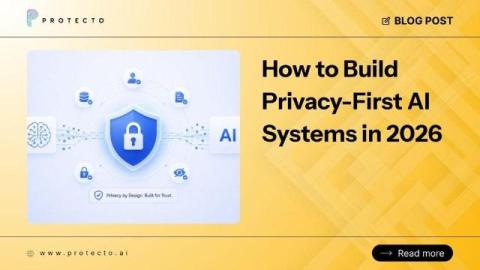
How to Build Privacy-First AI Systems in 2026

Your RAG pipeline goes live on a Monday. By Friday, a customer query is surfacing another user’s account number in a response. Privacy-first AI stops that before the data reaches any model. More than half of organizations have already experienced an AI-related security incident, according to Check Point’s 2026 Cloud Security Report, and most don’t catch it until an audit forces the issue. Start with AI data privacy concepts and best practices.

Least Privilege Access for AI Agents: How to Secure Autonomous Systems in 2026

AI agents are no longer just answering queries or summarizing documents. They are booking meetings, pulling customer data, triggering workflows, and even making decisions across systems. And they don’t ask for permission every time. That’s where the real problem starts. Because once an AI agent is connected to your tools, APIs, and internal systems, the question isn’t what it can do, it’s what it should be allowed to do.

Why AI Is Becoming an Operational Requirement for Security Teams

In our previous article, From Vulnerability Management to Continuous Security Operations, we explored how organizations are moving beyond traditional vulnerability management toward a model built on continuous visibility, continuous prioritization, and continuous action. But that evolution raises an important question: how do security teams sustain this model at scale? For years, the cybersecurity industry focused on visibility.

AI Analysts for Autonomous Vulnerability Response

Security teams are drowning in findings, not because scanners miss things, but because nothing confirms which ones an attacker could actually reach. Seemplicity AI Analysts run the investigation themselves, checking runtime configuration, network reachability, and exploit conditions for each finding, and re-rank your backlog by confirmed exploitability. What rises to the top is backed by evidence. What drops down has been checked and reasoned out.

Not Zero-Days. Not Nation-States. A Firewall Rule.

A firewall's entire job is to control what gets in. In Reach's research, it was the most common source of a configuration-related near miss or exposure, ahead of EDR and identity controls. It does not take much. One rule broadened for a project, one exception that outlived its reason, one change that shipped without anyone checking it against intent. A single overly permissive rule, sitting live between quarterly reviews, is enough.