Security | Threat Detection | Cyberattacks | DevSecOps | Compliance

Beyond the Model: Harnessing Frontier AI for Stronger Cyber Defense

Frontier AI is fundamentally changing the pace of cybersecurity. For defenders and adversaries alike, it compresses the time required to discover vulnerabilities, assess exploitability, and act. AI models can reason across entire codebases, identify complex vulnerability chains, and generate exploit paths at a speed and scale that was previously impossible. That's a breakthrough for defenders, but it's also a preview of how quickly adversaries will evolve.

How to Securely Roll Out Enterprise AI in 90 Days #shorts #aisecurity

Planning an enterprise AI rollout in 90 days? Establishing a robust AI Gateway Architecture is the critical first step to ensuring data compliance, enforcement, and security. Letting application traffic run straight to LLMs exposes your organization to severe security and compliance liabilities.

OpenAI's Sol, Terra, Luna Explained: Which One Should You Use?

-OpenAI has completely overhauled its model naming system with the release of GPT-5.6, introducing three distinct tiers: Sol, Terra, and Luna. In this video, we put OpenAI's new flagship model, GPT-5.6 Sol, to the ultimate test. Using the Codex extension in VS Code, we throw our classic "Build me a secure notes app or I get fired" prompt at Sol. Watch as we break down the pricing and reasoning differences of the new tiers, run a full security audit using Snyk, and see if Sol's $5/$30 price tag is truly production-ready or if a small local CSRF bug gets us "fired" first.

Why WatchGuard Is Investing Across the Frontier AI Ecosystem

Artificial intelligence is quickly becoming one of the most transformative technologies in cybersecurity. Unfortunately, it's not transforming the industry exclusively for defenders. Attackers are already experimenting with AI to accelerate reconnaissance, analyze software for vulnerabilities, develop fully-functional exploits, and automate nearly all parts of the attack lifecycle.

The Security Risks of AI Agents in the Enterprise

AI agents introduce a category of security risk that traditional application security, identity management, and even standard AI security programs were not designed to handle. Unlike a generative model that only produces text, an agent takes autonomous action against real systems, chains API calls together to accomplish goals, and often holds permissions broad enough to touch data across multiple business systems.

Where Security Breaks First in the AI Era

Most security programs were built for a slower clock. But as AI-assisted and autonomous attackers accelerate the pace of attacks, manual approval gates can become the point where defenders fall behind. This short video explores why security teams need to reexamine the processes, decision points, and response workflows that may slow them down when speed matters most.

Who's Winning the AI Security Race: Attackers or Defenders?

Defenders have gained early access to powerful AI tools, creating an opportunity to improve security outcomes and strengthen cyber resilience. But as these capabilities become more widely available, that advantage may not last. Rik Ferguson, VP of Security Intelligence at Forescout, shares his perspective on what security teams should be doing now to prepare.

What the Black Hat NOC taught me about MCP & agentic SOCs (Chapter 3 of 4)

The first time an MCP (Model Context Protocol) server felt real to me, it wasn't because of a clean demo. It was because of the noise. TL;DR: The harness matters more than the protocol, and the evidence matters more than both. MCP earns its keep when it shortens the path from a good security question to trustworthy evidence, and almost everything interesting about making that work happens in the harness wrapped around the model. In this series, I will cover how to build an MCP for an AI SOC.

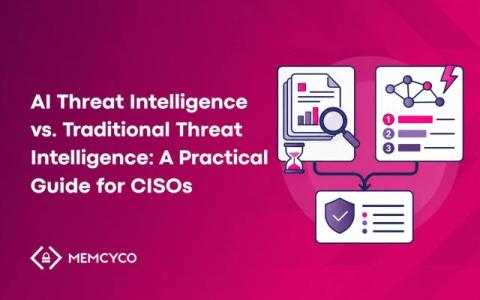
AI Threat Intelligence vs. Traditional Threat Intelligence: A Practical Guide for CISOs

Most CTI programs aren’t failing because analysts lack skill. They’re failing because signal volumes have outpaced what any manual workflow can process. Thousands of newly registered domains, phishing kit variants, and brand impersonation attempts surface daily. Human teams can’t triage all of it. Threat intelligence automation addresses the throughput problem by automating collection, enrichment and prioritization so analysts spend time on decisions, not data wrangling.