Security | Threat Detection | Cyberattacks | DevSecOps | Compliance

Small Talk: why cybersecurity matters beyond the office

Business security is often associated with larger companies where employees spend most of their time in front of computers. This stereotype can lead small business owners – especially ones outside the tech industry – to think they’ll never be targeted by hackers and don’t need to invest in security. It’s a mistake that cybercriminals are exploiting.


Linux-Targeted Malware Increases by 35% in 2021: XorDDoS, Mirai and Mozi Most Prevalent

Malware targeting Linux-based operating systems, commonly deployed in Internet of Things (IoT) devices, have increased by 35% in 2021 compared to 2020, according to current CrowdStrike threat telemetry, with the top three malware families accounting for 22% of all Linux-based IoT malware in 2021.

Procore + Egnyte | Optimizing Efficiency With An Integrated Solution

In this video, Procore’s Senior Director of Business Development, Kris Lengieza, discusses how mutual Egnyte and Procore customers can use the integrated software solution to work more efficiently. Integrated software solutions are critical to improved productivity, particularly for the construction industry. The increasing number of tools used per project makes a non-integrated environment very costly and time-consuming due to double entry, plus the need to jump between applications.

How to Outplay the Ransomware Playbook

Organizations across industries are increasingly concerned about their cybersecurity posture and overall ransomware preparedness – and rightfully so – with the 64% increase in attacks from 2019 to 2020 (304 million attacks worldwide in 2020). We have also seen a 2x increase in demand for ransomware preparedness assessments and exercises.

Monitoring your AWS environment for vulnerabilities and threat detection

Managing the security of your Amazon Web Services (AWS) environment requires constant vigilance. Your strategy should include identifying potential threats to your environment and proactively monitoring for vulnerabilities and system weaknesses that malicious actors might exploit. In a complex environment—such as your AWS account with a multitude of services, coupled with various architectures and applications—the ideal solution should be both comprehensive and straightforward.

Announcing Security Service Edge (SSE) for Dummies, the Industry's First SSE Book!

Security Service Edge (SSE) describes the evolving security stack crucial to a Secure Access Service Edge (SASE) journey, with core platform requirements that include CASB, SWG, and ZTNA capabilities. SASE is an architecture—really, a long-term journey that will change how we all think about security and networking. But SSE, as part of SASE, is a set of cloud-delivered security services you can acquire and make the most of today.

SSH Bastion Host Best Practices

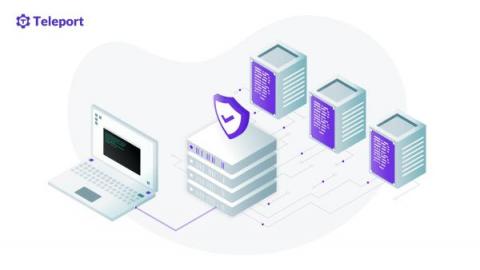
SSH bastion hosts are an indispensable security enforcement stack for secure infrastructure access. Every security compliance standard that deals with remote infrastructure access (e.g., FedRAMP AC-17 - Remote Access, HIPAA §164.312(a)(1) - Access control, SOC2 CC6.1 - Manage Points of Access) mandates preventing direct network access to the servers and APIs.

Proxy Servers vs. VPNs: What's the Difference?

Both proxy servers and VPNs hide your IP address, allowing you to access websites anonymously, but only VPNs direct all network traffic through an encrypted tunnel. Another key difference is that VPNs address all network data while proxy servers only operate on an application level. The differences between the two solutions can be summarized as follows: Before diving into their technical differences, its important to first solidify your understanding of proxy servers and VPNs.