Security | Threat Detection | Cyberattacks | DevSecOps | Compliance

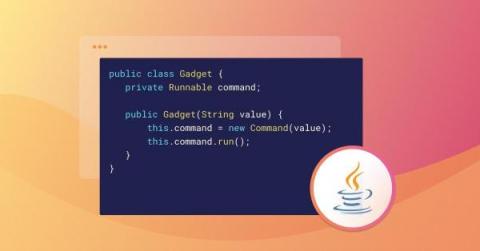
Unsafe deserialization vulnerability in SnakeYaml (CVE-2022-1471)

SnakeYaml is a well-known YAML 1.1 parser and emitter for Java. Recently, a vulnerability — CVE-2022-1471 — was reported for this package. This vulnerability can lead to arbitrary code execution. The org.yaml:snakeyaml package is widely used in the Java ecosystem, in part because it is packaged by default with Spring Boot in the spring-boot-starter.


CrowdStrike Services Helps Organizations Prioritize Patching Vulnerabilities with CrowdStrike Falcon Spotlight

When the CrowdStrike Services team conducts a proactive security engagement, such as a Cybersecurity Maturity Assessment or Tabletop Exercise, it often uses CrowdStrike Falcon® Spotlight to identify what vulnerabilities exist in the environment. Unfortunately, this can be a disheartening experience, as many organizations we see have millions, even tens of millions, of unpatched vulnerabilities. It’s typical to see at least a quarter of those listed with a CVSS rating of Critical.

Cloud Threats Memo: Understanding the Dead Drop Resolver Technique

If I asked you what the common ways to exploit a cloud app for malicious purposes are, I bet your answer would probably be either to use it to distribute malicious content (such as malware or phishing pages), or to host the command and control (C2) infrastructure. In reality another frequent technique is the dead drop resolver, where a legitimate service is abused by threat actors to host the information related to the C2 infrastructure rather than the C2 infrastructure itself.

SELinux, Dragons and Other Scary Things

If you've ever used Linux, you’ve probably heard about SELinux or Security-enhanced Linux. For a very long time, my interaction with it was just restricted to: Like many other security solutions, SELinux can sometimes be annoying, and understanding even the basic concepts can change our bigger enemy to our best friend.

A Quantum Arms Race in Cybersecurity

In 2001, NIST (the US National Institute of Standards and Technology) announced Advanced Encryption Standard (AES), a new encryption standard, designed to help organisations enhance protections against brute force attacks. The previous Data Encryption Standard (DES) had become vulnerable, with processing power growing, and the Electronic Frontier Foundation (EFF) had proved that DES encryption could be broken in less than 24 hours, therefore a new encryption standard was required.

WatchGuard Cybersecurity Predictions Challenge 2023

In 2023, WatchGuard predicts that hackers will try to bypass your cybersecurity defenses using new techniques focused on business processes, identity, and artificial intelligence. This year, Corey and Marc square-off in a Predictions Challenge, offering different takes on potential hacks and attacks in these categories. Whose predictions will come true…only time will tell!