20 USB devices. Your client needs 22. VMware ESXi has limits you need to know before deployment. Avoid unexpected device failures, redesigns, and downtime.
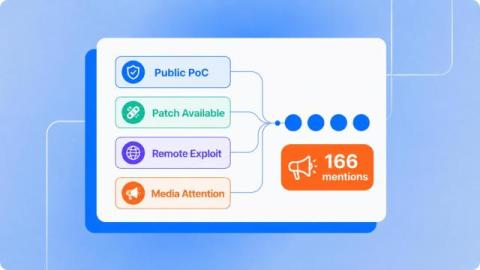
Nucleus Insights flagged 14 vulnerabilities with real-world exploitation activity that looked risky before CISA added them to KEV. The key takeaway: all 14 were later listed in KEV. Acting on those signals would have been the right call every time, just earlier.
These two photos were taken almost ten years apart. The first is from 2016, with Sam Altman at Y Combinator. The second came from an unexpected encounter in Silicon Valley almost a decade later. I’ll come back to it at the end. With Sam Altman at Y Combinator in 2016. I was 22 when I arrived in Silicon Valley on a one-way ticket, with a little bit of cash that was barely enough for one month of living there, and a thesis I wanted to prove.
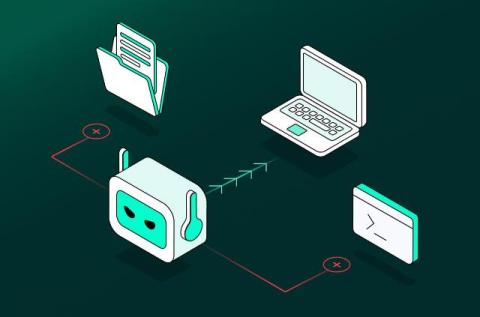
Imagine a developer asks a coding agent to investigate a failed deployment. The agent can read the project directory, inspect source code and configuration files, search the web for troubleshooting guidance, and use the developer’s approved tools.
In our previous “ABC’s of ‘ishing” posts, we explored how attackers use social media, calendar invites, fake CAPTCHA challenges, and other trusted tools to deceive users. This next installment looks at three phishing techniques that continue to put organizations and individuals at risk: evil twin phishing, domain spoofing, and email phishing.
Arguments for quantifying cyber risk are abundant and mostly sound. What gets published far less often is a plain account of what a modeled figure does not tell you, which is unfortunate, because stating the limits is more persuasive to a skeptical audience than another argument for the method. We build these models. What follows is what they cannot do, written plainly, followed by what remains useful once those limits are accepted.
A governance program looks complete until somebody asks it to prove something on a deadline it did not set. A supervisor sends an information request. An underwriter asks for control coverage before binding. A prospect's security team asks how a specific control operated last quarter, and the deal waits on the answer. Most programs can describe what they do accurately and cannot evidence it inside the window. The difference is not a documentation problem.
The standard answer to fragmented AI compliance is a responsibility matrix mapped across the lifecycle. Procurement accountable at intake, legal responsible for regulatory vetting, engineering accountable at implementation, security accountable for monitoring. Every stage has an owner and every function knows its part. Read that arrangement carefully and the problem is visible inside the solution.
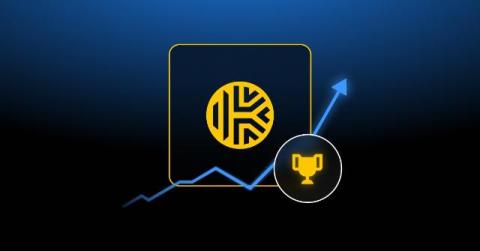
Keeper Security has been named an Exemplary provider in the 2026 ISG Buyers Guide for Identity and Access Management (IAM) platforms — ISG’s highest classification. ISG Research evaluated 31 software providers across authentication, authorization, identity lifecycle management and access governance. Keeper earned an A- grade in every category ISG measures and an overall performance score of 83.0%.