Security | Threat Detection | Cyberattacks | DevSecOps | Compliance

Find and stop vulnerable code at runtime - Secure App in Splunk Observability Cloud

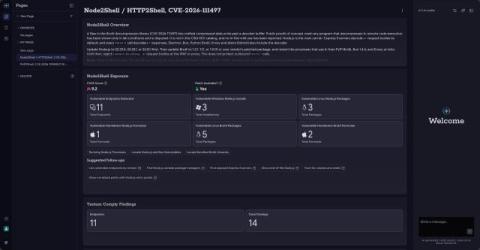
Secure App brings runtime application security into Splunk Observability Cloud using the same OpenTelemetry instrumentation as your APM traces to surface the vulnerabilities actually running in production, prioritize them by real-world exploit risk, and catch live attacks. TOC.

How to have an epic lunch break (UpGuard edition)

Chris O'Brien, Head of Sales Engineering at UpGuard, spent his lunch break at his local fair — carnival games, rides, and all. When we say work-life balance matters to us, we mean it. Sometimes that looks like stepping away from back-to-back meetings to grab a corn dog and a life-size plushie. UpGuard helps organizations manage third-party risk and monitor their attack surface — but great security work starts with a team that's supported enough to log off, recharge, and show up sharp.

Sumo Logic's SOC Analyst Agent: Automated triage for every tier one alert

Sumo Logic's SOC Analyst Agent automatically triages every insight within the SIEM, replacing the manual work that used to fall to a tier-one analyst. Using Sumo Logic's own SOC as customer zero, we found that 100% of tier-one alerts are triaged end-to-end by the agent, resulting in a 89% reduction in median time to triage, from 28 minutes to 3 minutes. In this demo, you’ll see.

Mobot: Sumo Logic's natural language AI for SOC investigations

Mobot is Sumo Logic's conversational interface designed to streamline investigations for SOC analysts and observability users. Ask a question in plain English and get a full SOC analyst-style investigation without writing a query. Inside an Insight, Mobot pulls context like the C2IP, ransomware hash, host, and exfiltration data automatically. A six-word question, "anyone else hit by the campaign?", triggers a full investigation across every mailbox and endpoint tied to that attack, with a link to the raw query behind every answer.

Adopting an AI-Native SDLC: Egnyte Search Team Case Study

By Bhumika Sharma | Manager, Engineering at Egnyte We ran an AI-native SDLC—here's what it changed about how we lead engineering. Egnyte's Search team serves 22,000+ enterprise customers across petabytes of content, and like every engineering org right now, we're figuring out how deeply AI tools should reshape how teams actually build software. Earlier this year, we kicked off a new project.

Secure at Inception: Announcing the Snyk Studio Integration for Snowflake Cortex Code

Building on our initial partnership that brought Snyk’s security intelligence into the Snowflake AI Data Cloud, we are taking the next step in securing the future of data-driven development. This new collaboration integrates Snyk Studio directly with Snowflake Cortex Code, ensuring that as organizations move their application logic to where their data lives, security remains an inherent part of the process rather than a secondary hurdle. Play Video: YouTube video 1.

Find Your Security Gaps Before AI Does

Before AI Finds Your Forgotten Data, Find the Security Gaps Around It – AI does not need to bypass security when outdated permissions already provide a path. Ask an enterprise AI assistant to summarize what your organization knows about a customer, project, employee, or acquisition. Within seconds, it may surface years-old files, inactive collaboration spaces, past emails and chats, and documents that were shared more broadly than anyone remembers. No system had to be hacked.

Stronger Teams Build Stronger Cyber Resilience

LevelBlue has been named a U.S. News & World Report 2026–2027 Best Company to Work For, earning recognition across three categories: Best Companies to Work For Overall, Best Companies to Work For in Information Technology, and Best Companies to Work For in the Midwest. We are proud of this recognition because it reflects something central to who we are: our people.

What Claude Mythos Means for Vulnerability Management Programs

If you've been following the cybersecurity conversation over the last several weeks, you've heard some version of the phrase “Claude Mythos changes everything.” It’s dominated the industry news cycles since early April. While the capabilities these stories tout are very much real, I have an issue with the framing being wrong when it comes to vulnerability management. There’s a narrative that Mythos and other frontier models will find too many vulnerabilities to deal with.