Security | Threat Detection | Cyberattacks | DevSecOps | Compliance

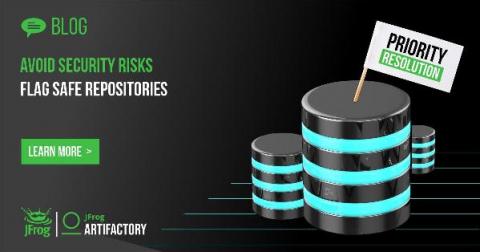
Going Beyond Exclude Patterns: Safe Repositories With Priority Resolution

You probably remember the Namespace Shadowing a.k.a. “Dependency Confusion” attack that was in the news a couple of weeks ago. I blogged back then about the Exclude Patterns feature of JFrog Artifactory which we’ve had forever and was always intended to protect you against those kinds of attacks.
Should Paying a Ransom be Illegal?

We're never ones to shy away from a good debate, as you'll know if you've been following us for a while. It's a popular opinion at the moment, if you follow the chat online, to make it illegal to pay the ransom following a hack which, in theory, certainly has some merit... Unless you've been living under a rock recently, you'll know that ransomware attacks are on the rise and despite the hackers supposedly having certain 'ethics' about avoiding essential service providers, it seems that no organisation is safe from attack.

How to Proactively Plan Threat Hunting Queries

As your security capabilities improve with centralized log management, you can create proactive threat hunting queries. Setting baselines, determining abnormal behavior, and choosing an attack framework helps you mitigate risk and respond to incidents. To reduce key metrics like the mean time to investigate (MTTI) and mean time to respond (MTTR), security operations teams need to understand and create proactive queries based on their environments.

How to prepare your business for secure cloud migration

The cloud holds a lot of potential for organisations. Moving your IT environment to a secure cloud provides flexibility and agility. It allows your team to be more productive and focus on delivering value for your business. Protecting your assets, particularly your data, will help you remain secure while your organisation scales using the cloud. As you prepare for cloud migration, it’s crucial that you have the buy-in from your whole organisation.

Data Loss vs. Data Leaks: What's the Difference?

Data loss refers to the unwanted removal of sensitive information either due to an information system error, or theft by cybercriminals. Data leaks are unauthorized exposures of sensitive information through vulnerabilities on the digital landscape. Data leaks are more complex to detect and remediate, they usually occur at the interface of critical systems, both internally and throughout the vendor network.

Top 3 NLP Use Cases for ITSM

What is NLP Natural Language Processing is a specialized subdomain of Machine Learning which is generally concerned with the interactions between the human and machine using a human verbal or written language. NLP helps in processing huge volumes of text which would take a significant amount of time for a human to comprehend and process otherwise. Hence a lot of organizations take advantage of NLP to gain useful insights out of their text and free formatted data.