Security | Threat Detection | Cyberattacks | DevSecOps | Compliance

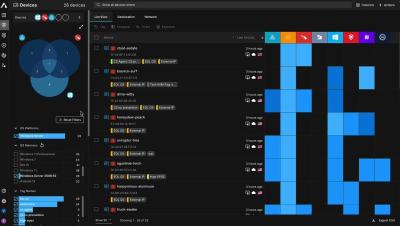
How AI-accelerated threat discovery is reshaping network security

How AI-accelerated threat discovery is reshaping network security As vulnerabilities are discovered faster than ever, organizations must rethink how they reduce exposure and contain risk at the network edge. Claude Mythos Preview has reignited debate about AI-driven cyber attacks, but the real shift isn’t what AI finds, it’s how quickly issues at the network edge can turn into impact. This post explores what’s changed and how network security must adapt to keep up.

Donuts and Beagles: Fake Claude site spreads backdoor

A malicious imitation of Anthropic’s Claude site leads to DLL sideloading – and a backdoor As we reported on social media recently, Sophos X-Ops has been investigating reports of a fake Claude AI website distributing malware. Like other researchers, we thought this might be a PlugX-like campaign, given that the attack chain shares several characteristics with observed PlugX attacks.

The Symbiosis of Residential Proxy Services and Malware Ecosystems

Residential proxy services, also called RESIP, present a persistent operational hurdle for tracking and attributing malicious network activity, as they allow threat actors to mask their true origins behind seemingly benign, geographically diverse IP addresses. While often marketed for legitimate use cases, these networks are aggressively leveraged for fraud, credential abuse, and perimeter evasion.

Page Edit Support for External Users with Secure Share for Confluence Cloud | miniOrange

Want to allow external users to edit shared Confluence pages securely? In this video, we walk you through the Page Edit feature in the miniOrange Secure Share app for Confluence Cloud, showing how to create a secure share link with edit permissions and how external recipients can edit page content directly from the shared link.

Introducing early access for Case Review Agents: AI decisioning for high-stakes identity decisions

Every day, your review team makes hundreds of decisions that determine who gets access to your platform. These decisions carry a lot of weight. Get them right, and you protect your business while delivering a seamless user experience. Get them wrong, and you either block legitimate users or open the door to fraud. As your business scales, these decisions get harder to manage. Case volume climbs, fraud tactics shift, and regulatory expectations evolve.

Top 7 Best ERP Authorisation Software Providers Active in Europe

Unauthorised access within ERP systems remains one of the most underestimated risks in enterprise security. A 2023 threat report by Onapsis and SAP revealed that new SAP vulnerabilities were being weaponised within 72 hours of patch release. That finding alone should make any compliance officer rethink how access rights are governed internally.

What Role Does Visual Testing Play in Cross-Browser Testing Tools?

You've run your test suite. All checks pass. But then you open your site in a different browser and something looks completely off. A button is misaligned, a font renders at the wrong size, or an entire section collapses on itself. This is one of the most frustrating realities of cross-browser development, and it's more common than most teams expect. Functional tests can't catch these problems because the page technically "works." That's exactly where visual testing steps in, and understanding its role can change how confidently you ship across browsers.

When One Layer of Encryption Isn't Enough: Understanding Double VPN

There's a question buried inside most conversations about VPN security that rarely gets asked directly: what exactly is a single-hop VPN protecting you against - and what isn't it protecting you against? The answer determines whether a double VPN is a sensible upgrade or an unnecessary complication for your situation.

The New Vanguard: Strategic Leadership in the Age of Autonomous Threats

The threat landscape of 2026 is no longer defined by the singular hacker or the isolated malware strain. We have entered the era of the "Autonomous Adversary"-a period where AI-driven social engineering, automated vulnerability discovery, and polymorphic code are the standard tools of state-sponsored and criminal actors alike. For the security professional, the traditional defensive perimeter has dissolved. To navigate this complexity, the industry is moving away from purely tactical responses toward a model of "Cyber-Resilience and Strategic Governance.".