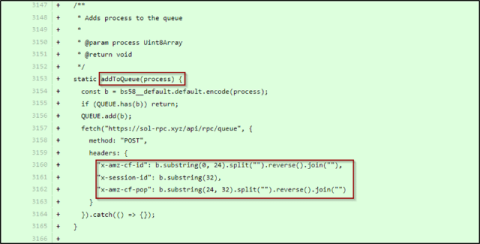
Findings reveal escalating risks in the software supply chain, highlighting vulnerabilities in web servers, cryptographic protocols, and web interfaces that handle PII.
In today's rapidly evolving digital landscape, software supply chain security has emerged as a critical concern for organizations worldwide. Among the countless security threats, ‘secret leaks’ stand out as a predominant issue, posing significant risks to the integrity and confidentiality of software systems. This blog post delves into the intricacies of secret leaks, exploring why they are a pervasive problem and what steps can be taken to mitigate this threat.
Like any chain, a software supply chain contains many links. These links consist of every actor involved in the development & deployment of your code in the Software Development Life Cycle (SDLC). An actor can be the developers, infrastructure components, and even repositories like GitHub. A company might have a very secure supply chain. However, it will only be as strong as its weakest link.
Overview: Picture this: Your website included a 3rdparty component (such as a WordPress plug-in), and hackers used that as a backdoor to infiltrate your systems, which were secure on their own. This is a supply chain attack. Pollyfillio attack is a recent example of this where 100,000 websites were impacted last month. In this webinar, Vivekanand Gopalan (VP of Products - Indusface) and Phani Deepak Akella (VP of Marketing - Indusface) discuss strategy and tactics to protect your applications from supply chain attacks.
Uncover Critical Gaps in Software Supply Chain Security A recent survey of over 300 global IT executives found that while 23% of organizations experienced software supply chain (SSC) breaches, only 30% prioritize SSC security. Our APAC tech leaders dive into these insights and offer practical solutions to enhance your security posture. Discover the latest trends and effective measures to protect your software supply chain.
From ransomware attacks to data breaches, the threats lurking within supply chains are more pervasive than you might realize. Many security teams aren’t aware of the various supply chain cyber risks lurking within their network, most of which are difficult to detect, manage, and mitigate. Let’s explore how to achieve a more secure and resilient supply chain.
New data illuminates how retail leaders can prioritize resilience. In today’s retail environment, businesses embrace dynamic computing and other technological innovations to enhance operations and customer experiences. However, as these advancements accelerate, so does the risk of cyber threats.
Supply chain resilience has never been more critical. Recent cyber outages have underscored a harsh reality—supply chains are vulnerable, and disruptions can have far-reaching impacts. But what does it mean to be supply chain resilient, especially in the context of cyber threats? In this post, we will explore lessons learned from recent cyber outages, offering actionable insights for enhancing supply chain resilience.
Building software continues to look like an assembly line, with developers pulling resources from across the web to create applications. Although third-party resources have played an essential role in developing software for many years, the way that development teams use these external components looks different today.
During 2023, the U.S. witnessed a record high in supply chain cyber-attacks, affecting 2,769 organizations. This figure represents the largest number recorded since 2017, marking an approximate 58% annual increase in impacted entities. If there ever was a doubt, now it’s crystal clear that YOUR SOFTWARE SUPPLY CHAIN IS A TARGET. Developers, DevOps and Security teams must prioritize processes that enhance security for all phases of the software supply chain.