Security | Threat Detection | Cyberattacks | DevSecOps | Compliance

GitProtect vs. Atlassian Backup: Comparison included

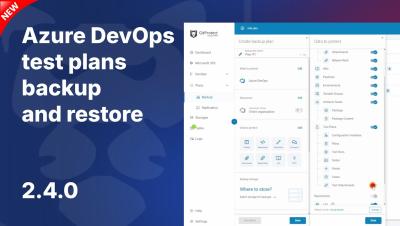
Atlassian’s Backup and Restore feature has recently transitioned from Open Beta (Atlassian BRIE backup) to General Availability (GA), marking an important step forward in SaaS data protection. The solution introduces native app-level backups for Jira and provides organizations with a built-in mechanism to respond to customer-owned disasters such as accidental deletions or configuration errors.

Protecting Remote Endpoints: Backup Best Practices for a Distributed Workforce | BDRShield Webinar

YouTube Description With remote and hybrid work becoming the new normal, laptops and desktops are now the most vulnerable — and most overlooked — layer of business data protection. In this practical webinar, the BDRShield by Vembu team explains how IT teams and MSPs can protect remote endpoints reliably without disrupting users or increasing operational complexity. Speakers: Mani Subramanian Product Manager, Vembu Technologies What You’ll Learn.

Partner-level vulnerability assessment and patch management for MSPs in Acronis RMM

For MSPs, vulnerability assessment and patch management are challenging primarily because of scale. Every new customer adds another tenant to configure, monitor and maintain, which multiplies operational overhead and increases the risk of inconsistency. The newly released cross-tenant, partner-level vulnerability assessment and patch management in Acronis RMM is designed to break this pattern.

Sovereign Clouds Need Open Data Protection. Here Is Why.

Digital sovereignty is not a talking point anymore. It is a real technical requirement. Governments, telcos, and regulated enterprises are building sovereign clouds on OpenStack to keep data under their jurisdiction. But what about the backups? If your sovereign cloud data protection solution uses a proprietary format, you have traded one lock-in for another.

AWS and Cloudflare Outages: How GitProtect Keeps Your Operations Running

The assumption that you’re ‘too big to fail’ or ‘too small to get noticed’ simply doesn’t hold water anymore. The year 2025 showed us once again that even the largest names on the market are not invincible. The same is true for any company that depends on their infrastructures. Without a real Plan B, your business’s reliance on cloud tech giants might be risky.

Common Security Gaps Solved by Managed IT Services

In today's digital world, security threats can affect every part of your business. Many companies install cybersecurity tools but still leave openings hackers can exploit. Even with strong software, human mistakes, outdated systems, and overlooked processes create vulnerabilities. Recognizing these common security gaps and understanding how managed services can address them is essential for keeping data safe, clients confident, and daily operations running without interruptions.

Protect OpenShift Virtualization Before Your MTV Migration Wave Hits

A practical guide to VM-aware data protection for VMware-to-OpenShift migrations VMware exits rarely fail because engineers cannot move bits. They fail because the organization discovers, mid-flight, that it cannot reliably recover those bits once they land somewhere new.

Acronis Cyberthreats Report H2 2025: Cybercriminals are now scaling attacks with AI

Cybercriminals are spending less time using AI to develop new kinds of cyberattacks. Unfortunately, that’s not good news. According to the Acronis Cyberthreats Report H2 2025, cybercriminals are focusing on using AI to scale and refine the attacks they’ve already developed. As a result, they’re working more efficiently. The Acronis Cyberthreats Report H2 2025 delves into many more cybersecurity trends and goes into much deeper detail on the evolving impact of AI on cyberthreats.

How to secure OT environments after Windows 10 end of support without disrupting production

Many operational technology (OT) environments depend on Windows 10 systems. In October 2025, Microsoft ended support for Windows 10. That doesn’t mean manufacturers have to immediately replace their systems, but it does change the risk profile related to unsupported operating systems. In OT environments, operating systems commonly reach end of support long before the industrial assets they control.