Security | Threat Detection | Cyberattacks | DevSecOps | Compliance

Global Campaign Discovered with Modbus PLCs Targeted and China-Geolocated Infrastructure Observed

From September – November 2025, Cato Networks threat researchers observed a global campaign involving suspicious Modbus/TCP (transmission control protocol) activity against internet-exposed PLCs (programmable logic controllers). The targeted footprint spanned 70 countries and 14,426 distinct targeted IPs, with the largest share of activity in the United States.

How PCB Layout Affects Wireless Performance

Wireless performance is often discussed as if it were determined mainly by the radio chip, antenna type, or communication protocol. Those factors do matter, but they do not tell the whole story. In real products, PCB layout often has just as much influence on wireless behavior as the module itself.

China-Linked Hackers Could Be Using Your WiFi Right Now

China-linked cyber groups have been hijacking everyday home routers—Linksys, Netgear, even small Cisco devices—and turning them into global proxy networks. That means an attacker can: This isn’t theoretical. In 2024–2025, massive botnets made of thousands of home routers were dismantled. The scariest part? Most people had no idea their device was involved.

Reverse Proxy: How It Works & Example Architecture

Accessing modern infrastructure requires more than a network-level foothold. As services spread across clouds, clusters, and regions, the question of who can reach what stops being a network question and becomes an identity question. Reverse proxies are the component that answers it. A reverse proxy sits between clients and backend services, validating identity and enforcing authorization on every inbound request before any application is touched.

Eliminating Enterprise Browser Complexity in the Age of Universal ZTNA

Enterprises don’t struggle with whether users should have access. They struggle with how that access happens and how to secure it without creating more complexity. Employees work from managed laptops, personal devices, and third-party systems. Contractors need fast onboarding. Partners can’t install agents. Some users rely entirely on a browser. This mix isn’t temporary; it’s how modern enterprises operate.

Cybersecurity AI Explained: Agentic AI, PQC, and Real-World Security Challenges

At the 2025 RSA Conference, Justin Foster joins Zeus Kerravala to break down where AI in cybersecurity is actually delivering value and where it’s falling short. As security teams deal with growing complexity, many are finding that today’s AI tools create as much friction as they solve. This conversation explores how a shift toward agentic, skills-based AI can help teams move faster, reduce noise, and focus on what really matters.

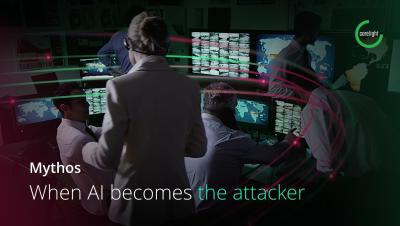
Defending energy infrastructure in the age of Mythos

The Department of Energy’s Office of Cybersecurity, Energy Security, and Emergency Response (CESER) has released its first five-year strategic plan, following the broader national cybersecurity strategy. It’s coming at a time when the energy cybersecurity landscape is changing quickly, in some cases faster than operators can realistically keep up.

Why MFA is the Foundation of VPN Security

VPNs have long been considered the backbone of secure remote access, especially as organizations shifted to distributed work environments. By encrypting data in transit, they create a secure tunnel between users and corporate systems. On the surface, this appears sufficient to protect sensitive business operations and internal resources. However, encryption alone does not guarantee security. VPNs do not verify who is accessing the network, only that the connection is valid.