Securing your Kubernetes environments may seem daunting at first, given how many different parts must be individually protected. Still, with the proper organization, you can make Kubernetes security much simpler and more effective. We’ve put together a complete Kubernetes security checklist of best practices and security recommendations to help you keep track of your progress. To make this a little easier, we’ve divided this checklist into the following sections.
As technology explodes, so do the threats. Point solutions emerge as security players innovate in order to keep up. This creates the need for consolidation, as the fragmented solutions become too much to manage. We’re entering a consolidation phase now, the process of distilling, refining, and letting the cream rise to the top. We sat down with cybersecurity veteran and vigilante, Chris Wysopal, to get his perspective on emerging trends in cloud-native security.
Open Policy Agent, or OPA, has emerged as an industry standard for cloud-native authorization and policy as code. From 2018 to now, it has grown from being a Cloud Native Computing Foundation (CNCF) sandbox project into a fully mature, graduated CNCF project, deployed by many of the largest organizations in the world. (For just the tip of the iceberg, here is a list of users who have made their adoption of OPA public).
Kubernetes provides an interface to run distributed systems smoothly. It takes care of scaling and failover for your applications, provides deployment patterns, and more. Regarding security, it’s the teams deploying workloads onto the Kubernetes cluster that have to consider which workloads they want to monitor for their application security requirements.
Open Policy Agent (OPA) can be a mighty tool for users looking to embrace a policy-as-code approach to authorization. However, learning to decouple policy decisions from your applications with OPA can be a challenge on its own — not to mention deploying and managing those OPA instances at scale.
Zendesk Engineering consists of many teams that own a large number of different domains, ranging from engineering teams that built internal services to teams that work on our various product offerings. One concern that these teams have in common is controlling access to their APIs via fine-grained policies. Some APIs are only available to admins, others to users with a specific set of permissions and some APIs restrict access based on attributes of the data being accessed.
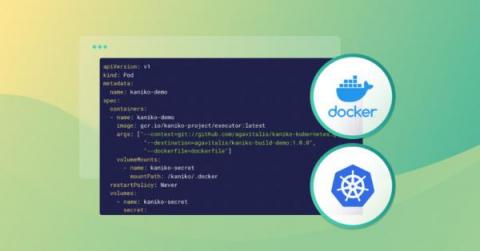
Containerization is a rapidly evolving technology in cloud-native applications. Just like computing systems, containers consist of packages of software programs with all the vital elements like binaries, files, and libraries for running an application in the environment from anywhere. Containers are lightweight, and DevOps teams develop applications and deploy services using them. Moreover, organizations also use these containers to deploy and scale the DevOps infrastructure like the CI/CD tools.
As more enterprises adopt containers, microservices, and Kubernetes for their cloud-native applications, they need to be aware of the vulnerabilities in container images during build and runtime that can be exploited. In this blog, I will demonstrate how you can implement vulnerability management in CI/CD pipelines, perform image assurance during build time, and enforce runtime threat defense to protect your workloads from security threats.