Databarracks accepted onto G-Cloud 13
Databarracks is pleased to announce that it has been accepted as a supplier on the G-Cloud 13 framework.


Zero Trust is the term for an evolving set of cybersecurity paradigms that moves an organization’s defensive measures from static, network-based perimeters to instead focus on users, assets, and resources. It is a security mindset where every incoming connection is treated as a potentially malicious request until explicitly verified. This concept was introduced by John Kindervag, one of the world’s foremost cybersecurity experts, and emphasizes three principles.
Changes to your IT devices, systems and servers are inevitable — but they can introduce critical security weaknesses. A file integrity monitoring (FIM) solution will track changes to your system and configuration files so you can promptly verify patch rollouts and investigate and mitigate unauthorized modifications — helping your business maintain a strong security posture and ensure ongoing regulatory compliance.
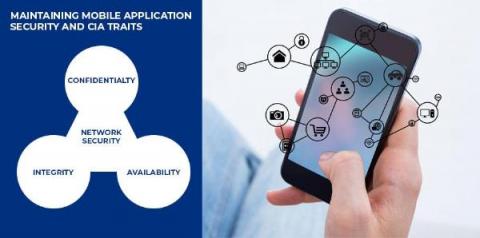
Nowadays, every business wants to reach out to a larger audience. And the best way for it is Mobile App Development. Whether someone is at work, at home, or somewhere outside, people frequently go through apps on their mobiles. Such apps collect data, store it and process it to provide reliable results. Indeed, our sensitive and confidential data is also getting into the same process. Hence, it makes a top priority to focus on mobile application security.
There’s no denying that the market for data encryption solutions is multifaceted and broad. But, it must be in order to keep up with modern security gaps and evolving threats. In this article, we’ll tell you about what enterprise data encryption is, why you should care about it, some of the different types of data encryption, and how SecureAge takes a unique approach to effectively protect enterprise data without compromising existing workflows or requiring a tech overhaul.
Vice Society, the cybercriminal gang responsible for the attack, is believed to have used internal login credentials leaked on the dark web to access LAUSD’s network and launch the ransomware attack. Twenty-three internal LAUSD credentials were leaked on the dark web leading up to the attack, with at least one set granting access to LAUSD’s Virtual Private Network (VPN).
The Uber data breach began with the purchase of stolen credentials belonging to an Uber employee from a dark web marketplace. The hacker tried to log into Uber’s network with these credentials but was unsuccessful because the account was protected by MFA. To overcome this security barrier, the hacker contacted the employee and, while pretending to be a member of Uber’s security team, asked them to accept the MFA push notification sent to their phone.