Security | Threat Detection | Cyberattacks | DevSecOps | Compliance

The Latest Cybersecurity News & Insights From Around The World



CRA 24-Hour Reporting Rule: What Happens If You Miss It?
The EU Cyber Resilience Act's 24-hour reporting deadline is already in force. Is your organisation prepared? Since 11 September 2026, manufacturers of covered software, IoT devices and connected products must report certain cybersecurity vulnerabilities and incidents within strict deadlines. Under the EU Cyber Resilience Act (CRA), manufacturers must submit: Within 24 hours: An early warning after becoming aware of an actively exploited vulnerability or severe incident affecting product security.

The 5 Biggest DORA Compliance Mistakes Financial Institutions Make
Are these common DORA compliance mistakes putting your financial organization at risk? The Digital Operational Resilience Act (DORA) requires financial entities to take a structured approach to ICT risk management and digital operational resilience. But organizations can still encounter gaps when translating regulatory requirements into day-to-day controls. In this video, we break down 5 common DORA compliance mistakes financial institutions should avoid, including.
What Makes a Good Security Agent? 5 Lessons from the AgentWorks Hackathon
Every security team is being told to adopt AI. Far fewer have been shown what "good" looks like in practice. Turnkey agents handle common, well-defined security tasks, but no two security teams operate the same way. Each has its own data, playbooks, escalation paths, and risk tolerances; unique context that no vendor can anticipate in a packaged solution.
How much AI risk is acceptable? The compromise infrastructure leaders shouldn't have to make
Spend any time with senior infrastructure and IT leaders right now and one conversation keeps coming up. The business wants AI, and increasingly it wants agentic AI: systems that don’t just recommend an action but take it. Boards have seen the productivity numbers. Competitors are announcing pilots. The pressure to move is real. At the same time, those same leaders own the risk register. They answer to regulators, auditors, and, when something goes wrong, the front page.
How Long Can a Misconfiguration Go Undetected?
Cloud applications are constantly evolving to accommodate new users, tools, and ways of working. However, every adjustment can also alter who has access to resources and what they can do with them. A misconfiguration occurs when an active setting fails to meet established security criteria. It can grant more access than necessary, keep an insecure protocol enabled, allow certain actions for too many users, or open a pathway for information to leave the organization.
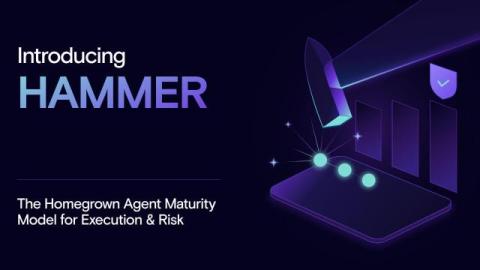
Introducing HAMMER, the Homegrown Agent Maturity Model for Execution & Risk
The Homegrown Agent Maturity Model for Execution & Risk (HAMMER): is a five-level framework with seven domains for security teams to locate where they stand on securing homegrown agents, then make the case for what they need to advance. The most powerful AI agents in your enterprise may be ones you never bought. Your own teams are building them by wiring models, tools, and data into software that acts on its own, often with little security approval or oversight.
Vibe Coding Security Under Test: 100+ Vulnerabilities Across Four AI-Built Apps
Vibe-coding platforms let you go from prompt to a deployed app in a single session, a pace that outpaces the review cycles most teams built for slower releases. With Lovable nearing 8 million users by late 2025, and Replit past 50 million by April 2026, we wanted to answer a sharper question than “is vibe coding safe?” Does the platform generating the code change the outcome, and does one security prompt give you the same security everywhere?
The Binance Hack Raises a Critical Question: What Can a Compromised Laptop Reach?
A compromised laptop may have started the Binance hack. What can an attacker reach from a developer’s machine?
Your Leaked Secrets Now Show Up in Wiz
GitGuardian now sends leaked secrets from GitHub, GitLab, Bitbucket, and Azure DevOps to Wiz once a day, with validity, severity, and a link back to the incident. Your cloud and AppSec teams see the same leaked key, and the secret value never leaves GitGuardian.