Security | Threat Detection | Cyberattacks | DevSecOps | Compliance

PCI Compliance Logging: Complete Guide to Requirement 10

Of the 12 Payment Card Industry Data Security Standard (PCI DSS) requirements, Requirement 10 is one your platform team can engineer directly. Under the PCI DSS v4.0.1 standard, automated log review has been a tested requirement since March 31, 2025. Your assessor will test the mechanism that performs the review. This PCI compliance logging guide covers each 10.x sub-requirement, maps the seven event classes to log sources, and lays out a nine-step program you can hand to your assessor.


Fake profile pictures: how to tell a stolen photo from an AI face

Most fake profile pictures are either a real person's photo taken without permission or a face that a generator made up. The two leave different evidence behind, so the test that exposes one will miss the other. Work out which one you might be looking at before you trust the account.

How Arrests Without a Conviction Affect Employment and Background Checks

An arrest that never leads to a conviction can still surface on a background check. Whether you can see that record-or use it-rests on strict reporting rules and anti-bias limits. On October 29, 2026, the EEOC scrapped its decade-old guidance, leaving many online explainers out of date. This guide answers four rapid-fire questions-Does the record exist? Can a vendor report it? May you weigh it? What guardrails apply?-so you keep talent moving and systems secure while staying inside the new legal lines.

CVE-2026-97229: GitLab RCE Added to CISA KEV

October 2026 has been an unusually loud month for critical disclosures across the ecosystem. Along with PHP2Shell, GitLab also joined the party and shipped three critical RCEs in the same month: CVE-2026-90970 (CVSS 9.9) in the self-hosted AI Gateway on October 2, then CVE-2026-97229 (CVSS 10.0) on October 12, and CVE-2026-110264 (CVSS 10.0) on October 21. The last two are integer overflow bugs in the exact same regex compiler, shipped nine days apart.

Astra Autonomous Pentest Product Video | Astra Security

Astra Autonomous Pentest is an AI-powered Autonomous Penetration Testing platform built to discover, exploit, validate, and help fix security vulnerabilities at scale. Trained on 10M+ security findings and 5,000+ real-world penetration tests, Astra AP uses specialized AI agents to ideate attack strategies, execute real-world attack scenarios, and validate findings with under 5% false positives. Its attack chain-driven approach uncovers complex vulnerabilities, including business logic flaws, IDORs, price manipulation, GraphQL vulnerabilities, and WAF bypasses.

Elastic AlertZero: Who controls AI agents in the SOC?

With Elastic AlertZero, security teams can configure agent autonomy, audit agent activity, and choose the AI models that fit their environments without being locked into a single model provider. Mike Nichols, GM of Security at Elastic, explains how AlertZero addresses three priorities for bringing agentic AI into security operations: transparency, control, and model flexibility.

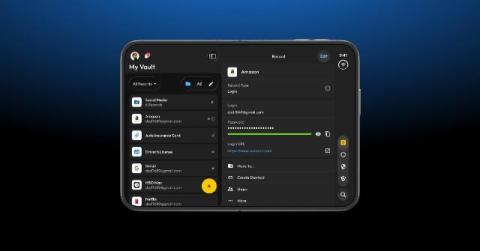
Manage Passwords on iPhone Duo With Keeper

A password manager for iPhone Duo helps you store and use unique passwords without having to remember each one. Keeper Password Manager brings passwords and passkeys together in an encrypted vault, with KeeperFill to help you sign in to websites and apps. Keeper’s iOS app is designed for iPhone Duo’s displays. When the device is open, you can browse vault folders and view record details side by side. When it’s closed, the app uses the outer display.

What Happens When You Admit You Don't Know Tech on Air

Online harassment erupted after a cybersecurity journalist admitted on live television that he'd only learned about PHP the previous day. Despite covering the breaking security story across BBC broadcasts, one moment of honesty triggered a painful backlash from parts of the cybersecurity community.