Security | Threat Detection | Cyberattacks | DevSecOps | Compliance

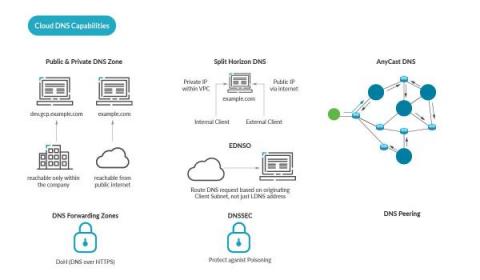
Cloud DNS Security - How to protect DNS in the Cloud

When using DNS in the Cloud, security cannot be forgotten. This article is for cloud architects and security practitioners who would like to learn more about deployment options to DNS security and security best practices for DNS in the Cloud. You will learn DNS best practices for DNS security, and see the advantages of a cloud approach for DNS. The three main requirements for DNS are: In this article, we begin with DNS basics, then move on to the topic of DNS in the Cloud.
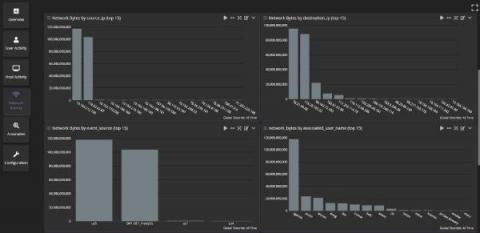

Centralized Log Management for Data Exfiltration

Remote workforce models don’t look like they’re going anywhere anytime soon. While your employees need to collaborate, you need to make sure that you mitigate data breach risks. You worked diligently over the last few years to put the right access controls in place. The problem? Data breaches aren’t always threat actors and are not always malicious.

MFA: Enhancing Security for Rubrik Security Cloud & CDM

Assume breach and recover faster Protect your data from the inevitable Recover safely, quickly, and precisely Assume breach and recover faster Register Now Bad actors often use phishing, smishing, vishing, and credential stuffing to obtain credentials, which they can use to gain a foothold in your systems. If an attacker can deploy ransomware and compromise the backups, it is impossible to recover, and this approach makes the ransom payment more likely.

The Essential Guide to No-Code Automation for Security Teams

Today we're excited to launch the Essential Guide to No-Code Automation for Security Teams. This free Tines playbook is designed to serve as the ultimate resource on no-code automation for security practitioners. It provides an overview of what no-code automation is, why it is a critical skill for those at the forefront of security operations, and how to bring the power of no-code automation to your security team.

Testing effectively in Terraform

Terraform is an infrastructure as code (IaC) solution that enables DevOps teams to use coding concepts to automatically deploy on-premise or public cloud infrastructure components. These components may include virtual machines, network components, storage, applications, or database services. Terraform provides HashiCorp Language (HCL).

Lookout contributes to 2022 Verizon MSI With Mobile and Cloud Security Insights

One of the best ways to stay up to date on how mobile devices affect your organization's security is by reading the Mobile Security Index (MSI) by Verizon. Lookout is a long-time contributor to the report, including the 2022 edition that was just published. This year’s MSI is especially interesting, as it dives deeper into the interconnectivity that now exists between endpoint devices and cloud applications.

Today's Security Tidbit: An Encrypted JSON File Containing Malicious Code

As security researchers, we see new malicious methods being introduced on a daily basis from the ever-industrious global cadre of malicious actors. But not all of the things we find constitute breaking news. Sometimes, we run across something that doesn’t necessarily pose a threat, but still piques our interest. Instead of being the security equivalent of a four-course meal, it’s more of an amuse bouche.

4 Benefits CIOs Ought to Know About SSE

As a CIO it is very easy to get “new-acronym-deafness.” New innovations need new words and name-tags to identify them, and while analysts work hard to provide benchmarks and standardised definitions, it can be hard to keep up. At Netskope we know how confusing it can get, because sitting at the vanguard of emerging categories means we have had to do our fair share of explainers and re-labelling over recent years.

Auto Industry at Higher Risk of Cyberattacks in 2023

Cyberattacks are an increasingly common occurrence for a spectrum of industries. Rising cybercrime affects everyone, but certain sectors are more at risk than others. In 2023, the auto industry could face particularly significant dangers. Attacks in the automotive space can impact automakers, automotive fleets, and consumers alike. Reducing these risks will be crucial as more cybercriminals seek to capitalize on the sector’s vulnerabilities.