A practical checklist for rotating service account credentials safely by assessing validity, leaks, permissions, consumers, vaults, copies, owners, and rollback.
Researchers at ZeroBEC are tracking a phishing platform called “Greatness” that’s been significantly upgraded since it surfaced in 2023. “Since its initial discovery, the platform has evolved significantly,” the researchers write.
Quantum Readiness Day on 24 September is a useful reminder that the security work we do today is not only about preventing breaches tomorrow. It is about protecting data and digital trust for years to come.
For years, security operations centres have operated under the same constraints of more alerts than analysts, more investigations than hours in the day, and more pressure than most teams can sustainably absorb. That imbalance is becoming dangerous as frontier models rapidly improve at finding vulnerabilities and turning them into exploits, while defenders are left dealing with the consequences in real time.
In 2026, network privacy has become a critical layer of modern cybersecurity. With cyber threats becoming increasingly advanced and businesses embracing hybrid work, cloud platforms, and interconnected systems, network security can protect data moving across networks and reduce exposure to cybercrime. This article will explore why network security is so important in 2026, the risks associated with unsecured connections, and how businesses can strengthen their posture. Read on to find out more.
In July, we launched Tines 3B to the world, and it’s been incredible to see the response from our customers. It wasn’t a surprise though, we had a sneak peek of how much value 3B could bring when we launched it internally. On June 2, around eight weeks before the product's general availability, we unlocked the doors of 3B, let every single Tines employee into our own instance, and invited them to start building.
Most organizations already have an insider risk management (IRM) program in some form. They have a tool, a dashboard, and an analyst reviewing alerts. What they often lack is a program built on the specific capabilities that turn activity logs into stopped incidents and reduced insider risk.
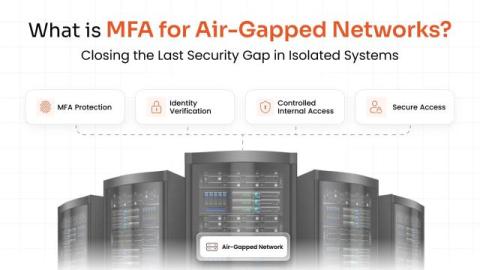
Air-gapped networks are supposed to be untouchable. No internet connection, no remote pathway, no way in for an attacker sitting halfway across the world. But ask any security team that has actually run one of these environments, and you'll hear a different story. Air gaps stop remote attacks cold. But they do almost nothing to stop a stolen password, a careless USB stick, or an insider with too much trust and too little oversight. That's the gap, and Multi-Factor Authentication (MFA) is here to fill it.
An application that was AI-free at the last audit may be processing corporate data through a language model today. Nobody procured it, nobody approved it and nobody was asked. A vendor shipped a release. Third-party AI governance is built almost entirely around procurement. Assess the vendor, negotiate terms, sign a data processing agreement, add the tool to a register. The apparatus requires a purchasing event, and an embedded feature produces none, so the apparatus never engages.