Security | Threat Detection | Cyberattacks | DevSecOps | Compliance

Securing legacy systems and protecting your Data

If you ask the question “who is responsible for a company’s cybersecurity,” the answer you’ll most likely hear is no longer the CTO, or the IT department, but instead the CEO. In fact, Gartner believes that 75% of CEOs will be held personally liable for cyber and physical breaches by 2024. That means there’s no more passing the buck on this complex issue.

What You Need to Know About Code Risk Management

Risk management of code is an important and often overlooked development function that you need to pay attention to. You may think that this is not a developer’s problem, however developers should not write code that unduly adds to technical debt, hence the need to manage risk. The primary motivation for risk management is to prevent error or failure. Do not seek to eliminate failure, seek to minimise it, to manage the risk of failure.

Microservices Transformed DevOps - Why Security Is Next

Microservices fundamentally changed the way we build modern applications. Before microservices, engineers had a small number of huge chunks of code that made up their application. Many apps were a single monolith of code, and some might have been broken out into a frontend, backend and database. So, when a team needed to update or patch their code, they had to do it slowly and with great care because any change to any part affected every other part of their app.

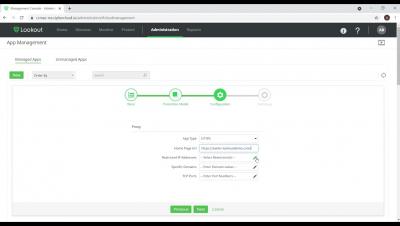
Lookout ZTNA - Intro to onboarding an application, securing access and protecting sensitive data.

In this Lookout ZTNA demo video, you will see how to onboard an application that is within your corporate network, how to secure access to the application using identity-driven policies and how to apply data protection policies to protect sensitive data.

Rooting Malware Makes a Comeback: Lookout Discovers Global Campaign

Security researchers at the Lookout Threat Lab have identified a new rooting malware distributed on Google Play and prominent third-party stores such as the Amazon Appstore and the Samsung Galaxy Store. We named the malware “AbstractEmu” after its use of code abstraction and anti-emulation checks to avoid running while under analysis. A total of 19 related applications were uncovered, seven of which contain rooting functionality, including one on Play that had more than 10,000 downloads.