Security | Threat Detection | Cyberattacks | DevSecOps | Compliance

How to Improve MTTR: A Practical Guide for Security Teams

A critical alert enters the SOC queue during the overnight shift. By morning, the dashboard shows an acceptable headline MTTR because the incident was closed quickly after an analyst finally picked it up. The timeline tells a different story: the alert sat unassigned for nine hours because severity routing sent it to the wrong queue. The team optimized the visible number while leaving the dangerous delay untouched.


How SLED can win the cybersecurity race with agentic AI

Adversaries are using AI to launch cyber attacks in record time, forcing security teams to measure responses in minutes instead of months. Phishing campaigns built with large language models (LLMs) achieve click-through rates 4.5 times higher than traditional methods,1 and the average time between initial compromise and lateral movement has fallen to just 29 minutes.2 This is a 65% increase from the prior year.2 State and local governments and higher education institutions are at an inflection point.

We Solved Visibility. Now We Have to Solve the Work

Consolidating every security finding into one place solves visibility, but it doesn’t reduce risk on its own. Aggregation without context just makes the backlog feel bigger. Real remediation depends on answering four questions about each exposure: what needs fixing, why it matters, where the fix happens, and who owns it.

The 12 Best Third-Party Risk Management Software Solutions (2026)

‍Last updated: August 20, 2026‍ A supplier breach or a tough question from a regulator can force a rushed third-party risk management (TPRM) evaluation. You need an answer before the next steering meeting. This list compares the 12 best third-party risk management tools in 2026, based on the capabilities that separate them in daily use, so you can shortlist faster. Whether you're an analyst running early research or a CISO approving the budget, you're working from the same criteria.

When Reading Apps Handle Sensitive Documents: A Practical Privacy Checklist

Read-aloud and AI explanation tools can make difficult material easier to use. Before opening a confidential PDF, however, users should understand where the text goes, what the app stores and which permissions it really needs.

Segmenting visibility with DNS Views for tighter network access control

Most organizations experience a strange DNS problem at some point: The same domain name means something different depending on who's asking for it. For example, a single internal app, workspace.company.com, might need to serve a locked-down instance to finance, a live staging build to engineering, and a stable production build to support — all under one domain and from the same DNS server.

Top tips: How to spot a scammer pretending to be your boss

Top tips is a weekly column where we highlight what's trending in the tech world and share practical ways to navigate these shifts. This week, we're looking at spear-phishing: how cybercriminals weaponize social engineering, why your natural instinct can act as a security blind spot, and practical steps to verify suspicious requests before you take action. I would like to make a confession: I’m a well-versed tech expert, but I almost fell for a phishing scam.

Why Business Leaders Need a New Response Model to AI-Enabled Incidents

Originally published by Cybersecurity Insider. Over the past decade, cybersecurity threats have evolved from a technical issue into a key driver of business and operational risk. Artificial intelligence is accelerating that shift even further, changing the game once again. In 2026, AI in cybersecurity is multifaceted: a tool for defense and incident response, but also a powerful accelerator for attackers. AI-enabled incidents rarely stay contained within the security function.

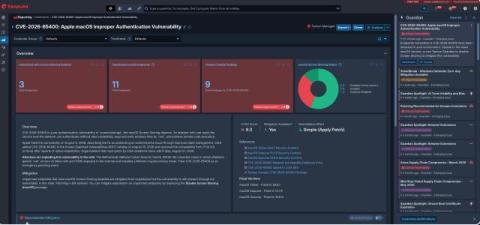
Critical macOS Screen Sharing Authentication Bypass - Under Active Exploitation (CVE-2026-65400)

On August 6, 2026, Apple shipped an emergency, out-of-band fix for CVE-2026-65400, an authentication issue in screensharingd, the daemon behind Screen Sharing, macOS's built-in remote desktop service that listens on TCP port 5900. Apple's advisory describes an attacker who could reach the service over the network and authenticate without valid credentials, then read and write files as root—enough to achieve full remote code execution.