Security | Threat Detection | Cyberattacks | DevSecOps | Compliance

What is an attack vector? Assess your attack surface and how to avoid cyber attacks.

Attack vectors are defined as the means or paths by which hackers gain access to computers remotely with malicious intentions such as delivering payloads or carrying out other harmful activities. Some common ones are malware, social engineering, phishing and remote exploits.
Snyk Code is now available for free

Snyk’s mission is to empower developers and DevOps teams to secure their applications. As part of that security mission, Snyk offers a Free plan for Snyk Open Source, Snyk Container, and Snyk Infrastructure as Code, so all developers can code securely. Today, we’re excited to announce that Snyk Code is now available for free as well.

UpGuard

A better, smarter way to protect your data and prevent breaches. Our products help security, risk and vendor management teams take control of cyber risk and move faster with confidence.

Ask SME Anything: What are the major transformations behind SASE architecture?

In this episode of Ask SME (Subject Matter Expert) Anything, Netskope’s Michael Ferguson explains the origin of SASE and how it is changing the way we look at data and cloud security. Netskope, the SASE leader, safely and quickly connects users directly to the internet, any application, and their infrastructure from any device, on or off the network. With CASB, SWG, and ZTNA built natively in a single platform, Netskope is fast everywhere, data centric, and cloud smart, all while enabling good digital citizenship and providing a lower total-cost-of-ownership.

A Real-World Look at AWS Best Practices: IAM User Accounts

Best practices for securing an AWS environment have been well-documented and generally accepted, such as AWS’s guidance. However, organizations may still find it challenging on how to begin applying this guidance to their specific environments. In this blog series, we’ll analyze anonymized data from Netskope customers that include security settings of 650,000 entities from 1,143 AWS accounts across several hundred organizations.

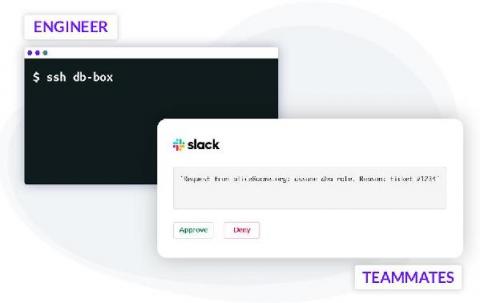
Pull Requests for Infrastructure Access

Making frequent changes to cloud applications running in production is the de-facto standard. To minimize errors, engineers use CI/CD automation, techniques like code reviews, green-blue deployments and others. Git pull requests often serve as a foundational component for triggering code reviews, Slack notifications, and subsequent automation such as testing and deployments. This automated process enforces peer reviews and creates enough visibility to minimize human error.

De-Risking Network Automation By Integrating with Itential

Today’s networks are too complex for manual network management and updates. With most enterprises composed of tens of thousands of devices spanning multiple geographical locations, on-premises hardware, Virtual environment, and multiple clouds – it’s virtually impossible to push updates manually. Also – the sheer volume of vendors and coding languages can be overwhelming for a network operations engineer.