APT-C-60 Exploits Zero-Day Vulnerabilities: Inside the SpyGlace Loader, COM Hijacking, and C2 Infrastructure

The cyber espionage landscape continues to evolve in sophistication and stealth—and among the more notable actors is APT-C-60. In recent months, this adversary has significantly escalated its tactics by leveraging zero-day vulnerabilities and orchestrating multi-stage campaigns to deploy the SpyGlace back-door.


Scaling Exposure Management: Program Maturity and Continuous Optimization

Building an exposure management program is just the beginning of a long journey. True success comes from scaling that program through continuous optimization, measurable progress, and organizational alignment. As enterprises expand their digital footprint, exposure management must evolve from reactive vulnerability remediation to a proactive, data-driven discipline that continuously strengthens resilience.

What is KeeperAI?

KeeperAITM is an agentic, AI-powered engine embedded within KeeperPAM that delivers real-time threat detection and response, as well as privileged session analysis. Built for Privileged Access Management (PAM), KeeperAI monitors user activity, providing behavioral insights and automated incident response in both live SSH sessions and post-session playback.

Clarity in Exposure Management

Vulnerability reports shouldn’t read like riddles. Seemplicity’s Clarity AI Agent transforms dense, technical scanner output into clear, contextual language everyone can understand — bridging the gap between security, IT, and engineering. Discover how Clarity makes every finding readable, actionable, and ready for remediation.

Faster security investigation with Cloud SIEM playbooks

Playbooks — and automated processes in general — were once primarily associated with security orchestration, automation and response (SOAR) platforms, but that has changed recently. Many modern security information and event management (SIEM) solutions have started incorporating SOAR-like functionality, enabling you to automate security workflows and improve your mean time to detect (MTTD) and mean time to respond (MTTR).

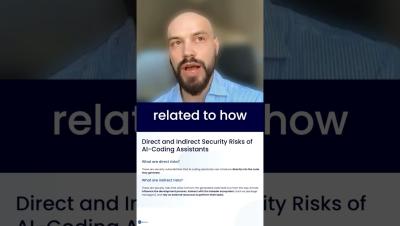
Direct vs. Indirect AI Risks: What Security Teams Need to Know #AIsecurity #AppSec #AInative

AI coding assistants don’t just speed up development — they introduce two kinds of risks you can’t afford to ignore. Direct risks: vulnerabilities added straight into generated code. Indirect risks: exposure through how AI tools shape workflows, dependencies, and external connections. Both can create blind spots — and both demand visibility. Watch to learn how recognizing these layers helps secure your AI-driven workflows.

Malware Families, Mobile Threats, and the Human Risk Narrative Shaping Cybersecurity

The battle against cyber threats is never-ending — and mobile is the new battleground. Modern workers now rely on mobile devices to access sensitive information, often using a single device for personal and professional purposes. As a result, malicious actors have sensed a blind spot and are using these devices as the first line of attack to gain a foothold into secure systems. 1.2 million enterprise employees were exposed to mobile phishing attacks in Q2 2025.

Dissecting and Understanding APT Threat Group Activity

Government administration, defense, and finance sector organizations are the primary areas Advanced Persistent Threat (APT) groups are targeting, according to the most recent data from the Trustwave SpiderLabs’ Cyber Threat Intelligence (CTI) team. The team found most attacks are launched from China, Russia, and Iran, with the primary targets residing in the US, Ukraine, and, interestingly, Russia. The groups tracked include Lapsus$, ShinyHunters, and Silk Typhoon.