Cyberint research team closely monitors threats related to COVID-19, leveraging the global fear and uncertainty around it. Utilizing thematic lures, a variety of cyberattacks have been launched during a time when many are seeking critical information on the outbreak. Exploiting the headline-dominating crisis, individuals, organizations and governments alike are tricked into opening malicious payloads, visiting malicious websites and are subject to misinformation or fraud.
Acknowledging recent reports of ransomware targeting educational institutions, it is no wonder that there have also been articles that attempt to lure in readers with “free” tools. What is disappointing is that these “free” tools are little more than marketing pieces that direct you to click on readily available documentation from Microsoft or Google.
Five worthy reads is a regular column on five noteworthy items we’ve discovered while researching trending and timeless topics. This week, we highlight the importance of creating and enforcing a solid cybersecurity strategy for employees who work remotely.
If you are even considering investigating an employee or monitoring employees in general, consider modern computer forensic tools for a complete solution. Computer forensic tools allow an employer to gather digital evidence before confronting an employee. With the Covid-19 (Coronavirus) outbreak, these types of solutions can also help to monitor employees that are self-quarantined or voluntarily working from home.
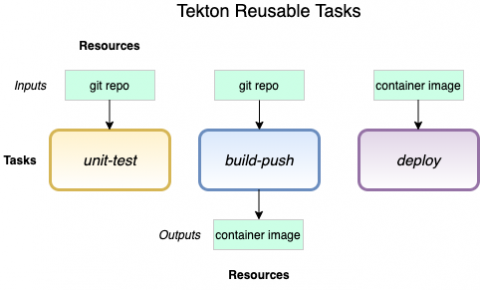
In this blog post, you’ll learn how to create a reusable Sysdig Secure image scanning task, for Tekton pipelines and Openshift clusters, that can be deployed in many pipelines. As a DevOps engineer, you want to deliver applications fast but keeping compliance with security standards like CIS, PCI DSS or NIST 800-190, GDPR can be an arduous task. You might implement image scanning in your CI/CD pipelines to detect and resolve issues such as known vulnerabilities and incorrect configurations.
Outsourcing, digitization, and globalization are three of the largest trends in the last 30 years. They've brought new products and services, increased specialization, lower costs, and improved access. But they've also introduced significant cyber risk. Particularly the risk of data breaches and data leaks. For perspective, a recent study by the Ponemon Institute put the average cost of a data breach at $3.92 million. The unfortunate truth is third-parties cause a lot of data breaches.
Outsourcing, digitization, and globalization have brought us new products and services, allowed for increased specialization, lowered costs, and improved access but they've also introduced significant cyber risk. Particularly the risk of data breaches and data leaks. And with the average cost of a data breach reaching close to $4 million dollars according to a recent study by the Ponemon Institute, it pays to prevent them. The unfortunate truth is third-parties cause a lot of data breaches.
The amount of cyber risk the average organization is taking on has never been higher, a big part of it in the form of third-party and fourth-party risk. A household name reporting a data breach or data leak feels like a daily occurrence. And with the average cost of a data breach reaching close to $4 million dollars according to a recent study by the Ponemon Institute, organizations are looking for new ways to prevent them. The unfortunate truth is third-parties cause a lot of data breaches.