Four Steps to Modernizing Government Cybersecurity with Zero Trust based on the Executive Order

The pandemic has accelerated digital transformation and telework on a scale never seen before. Employees are working from anywhere and collaboration in the cloud has skyrocketed. But this new environment has expanded the cyber attack surface, compromising critical U.S. infrastructure and lives of our citizens. The recent slew of major cyber attacks including SolarWinds, Microsoft Exchange and Colonial Pipeline, has moved cybersecurity improvements to the top of the agenda for the U.S.

How Cloud Evangelists Face - and Overcome - Cloud-Computing Security Challenges

This is the third in a series of posts examining the recent Devo research report, Beyond Cloud Adoption: How to Embrace the Cloud for Security and Business Benefits, which is based on a survey conducted by Enterprise Strategy Group (ESG). This time, we’ll take a look at the cloud-computing security challenges Cloud Evangelists face. Let’s begin by explaining how we define that group.

How the Elastic InfoSec team uses Elastic Security

At Elastic, we internally use, test, and provide feedback on all of our products. For example, the Information Security team is helping the Product team build a stronger solution for our customers. The InfoSec team is an extremely valuable resource who acts not only as an extension of Quality Assurance/Testing, but also as a data custodian.

Spotlight on Technology - Encryption

In our new series, Spotlight on Technology, we invite experts from different areas of cyber security to talk to us about their specialisms. First up, we take a look at encryption with James Rees MD of Razorthorn, a cyber security consultancy & Scott Glazer from Atakama, New York based multifactor encryption software specialists. 80% of companies hit by ransomware are hit twice in a short space of time – 45% of the time by the same attacker as the initial breach. We need to take a new approach to defend against this modern day threat.

Detecting new crypto mining attack targeting Kubeflow and TensorFlow

Microsoft has discovered a new large-scale attack targeting Kubeflow instances to deploy malicious TensorFlow pods, using them to mine Monero cryptocurrency in Kubernetes cluster environments. Kubeflow is a popular open-source framework often used for running machine learning tasks in Kubernetes. TensorFlow, on the other hand, is an open-source machine learning platform used for implementing machine learning in a Kubernetes environment.

Fortifying Cyber Defense: How to Act Now to Protect Global Supply Chains

This webinar was hosted by Ignyte Assurance Platform and Federal Publication Seminars on 18 June 2021. The Cybersecurity and Infrastructure Security Agency (CISA), under the Department of Homeland Security, launches a campaign to reduce the risk of ransomware. Following an executive order signed by President Biden on May 12, 2021, which aims to increase cybersecurity defenses and resiliency against nation-state data exfiltration and hold global criminals accountable for ransomware attacks.

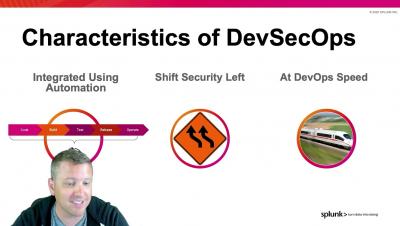
DevSecOps is a practice. Make it visible

Security should be embedded in DevOps by default, but for many organizations, it is not. Enter “DevSecOps”. What is DevSecOps? It is a practice to build more secure applications, secure the software factory, and secure cloud workloads. Because it is a practice it needs to be visible. In this session hear about the ways tech-enabled enterprises approach a DevSecOps practice, how they make it visible, and how Splunk + JFrog can accelerate your journey.