Announcing Snyk's Series F: Leading the World to Developer Security

We’re proud to announce our Series F funding at a $8.5B valuation, co-led by Capital Ventures and Tiger Global! We believe in helping the world’s developers build secure applications and equipping security teams to meet the demands of the digital world. Thank you to our investors and community for supporting our vision. We're excited to continue our journey of advancing and leading developer security.
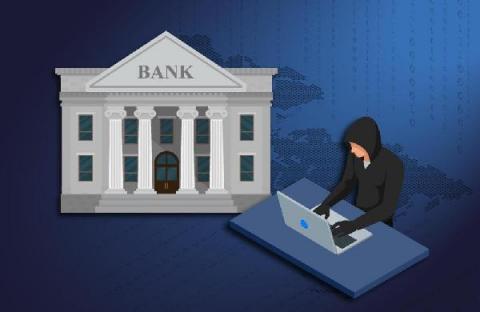
Open Source Risk Management in the Financial Sector

Banking has changed. In the past, financial institutions outsourced their technology. They had large consulting firms creating, managing, and maintaining their back-end systems. Although banks would have knowledge of the systems in place, they wouldn’t be running them on a day-to-day basis. That was the consultants’ responsibility. Recent years have seen a significant shift in the financial sector.

Anti-Money Laundering Compliance in 2021: How Transaction Monitoring Can Help You Keep Up with Emerging Threats

Every year, 2%-5% of the global GDP, or US$800 billion-US$2 trillion is being laundered across the globe. That’s almost equivalent to the GDP of Canada (1,643.40 billion USD in 2020) or Italy ($1,886.45 USD in 2020). Neither the record-breaking heat, nor the intense floods experienced around the world this summer seem to have stopped financial criminals from inventing new ways to hide illegal sources of their income.

How Lack of Awareness and Clinging to the Past Threaten Your Networks

The security landscape is always changing. New features are coming out all the time, but often backward compatibility is maintained too. What this means is that while the new features may be present and active by default, it's possible for users to be completely unaware of them and continue using the legacy functionality.

Technology Professionals in Short Supply - 3 Tips to Retain Yours

In an article posted on the organization’s website, the Center for Strategic and International Studies (CISI.org) reported that, as of January 2019, the United States had 314,000 more available cybersecurity positions than it had trained professionals available to fill them. That was an increase of over 50% since 2015.

Ask SME Anything: Does SASE offer any benefit if my organization is still on-premise?

In this episode of Ask SME (Subject Matter Expert) Anything, Netskope’s Vidur Ramnarayan discusses how SASE can benefit any organization whether they are on-premise, fully in the cloud, or somewhere in between. Netskope, the SASE leader, safely and quickly connects users directly to the internet, any application, and their infrastructure from any device, on or off the network. With CASB, SWG, and ZTNA built natively in a single platform, Netskope is fast everywhere, data centric, and cloud smart, all while enabling good digital citizenship and providing a lower total-cost-of-ownership.

Microsoft warns of a Windows zero-day security hole that is being actively exploited

In a security advisory, Microsoft has warned that malicious hackers are exploiting an unpatched vulnerability in Windows to launch targeted attacks against organisations. The security hole, dubbed CVE-2021-40444, is a previously unknown remote code execution vulnerability in MSHTML, a core component of Windows which helps render web-based content. According to Microsoft, attacks exploiting the vulnerability have targeted companies via boobytrapped Microsoft Office documents.

Best Practices for Trusted Third-Party Risk Management

Third parties are a necessary part of your enterprise. They are your vendors, your suppliers, your contractors, and your partners. Without them, you can’t do business. Third parties provide cloud services, store sensitive data, and provide other important services. Unfortunately, third parties are also a major source of cyber risk. Cybercriminals often target third-party providers to target their clients’ data and networks, such as the notorious SolarWinds breach at the end of 2020.

Preparing for IT/OT convergence: Best practices

Modern-day industrial and critical infrastructure organizations rely heavily on the operational technology (OT) environment to produce their goods and services. Beyond traditional IT operations that utilize servers, routers, PCs and switches, these organizations also rely on OT, such as programmable logic controllers (PLCs), distributed control systems (DCSs) and human machine interfaces (HMIs) to run their physical plants and factories.