What is the California Privacy Rights Act (CPRA) 2020 and how does it compare to the CCPA?

The California Privacy Rights Act (CPRA) is an extension of the 2018 California Consumer Privacy Act (CCPA). The goal of both laws is to enhance the privacy rights of California residents with regards to the personal information that companies collect about them, giving them the right to see, delete and limit the sale of that data. The CPRA will be fully implemented in mid-2023. In this article, we will take a close look at the provisions of CPRA and how it amends the CCPA.


Beyond the Binary: A Third Contender in the Full Tunnel vs. Split Tunnel VPN Debate

Co-authored by James Robinson and Jeff Kessler As rapidly as wide-area networking (WAN) and remote access strategies with associated technologies are changing, we’re always surprised by the amount of time some security professionals and auditors dedicate to the either/or debate between split tunnel and full tunnel connectivity.

Data Security Summit 2021 Recap

Is your data safe from ransomware attacks? Hear from security leaders from both the private and public sectors to learn why network, perimeter, and application security isn’t enough. Learn about new cyber/ransomware threats, how ransomware impacts every layer of your organization from board decisions to shareholder value, and how you can survive an attack without paying the ransom.

Missing Critical Vulnerabilities Through Narrow Scoping

The typical process when scoping a penetration test is to get a list of targets from the client, which are typically a list of IP addresses and/or hostnames. But where does this information come from, and how accurate is it? Chances are the client has documentation that lists the devices they think they have, and what addresses or names they have been assigned. This documentation will form the basis of the scope when conducting testing or scanning against a target environment.

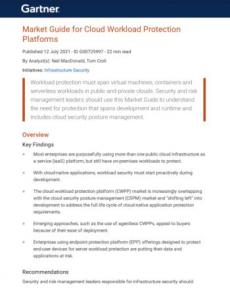
2021 Gartner Market Guide for Cloud Workload Protection Platforms (CWPP)

Based on our understanding of the Gartner report, security and risk management leaders should develop a strategy for addressing the unique and dynamic requirements for protecting hybrid cloud workloads. Gartner's recommendations for cloud workload security include: Sysdig is listed by Gartner® as a Representative Vendor for Cloud Workload Protection Platforms. Gartner also notes Sysdig in the list of companies building or acquiring CSPM capabilities.