API Security: Understanding Types, Challenges, and Best Practices

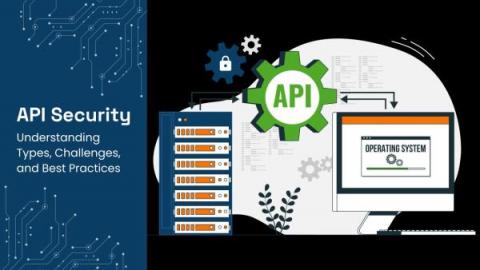
The digital world has brought advancements in all sorts of life. The applications communicate with each other over the internet to deliver effective service. API is an application language that interacts with the application server to extract the client’s intended information and produce it readable. It is estimated that the global API market will reach about 13.7 billion US dollars by 2027. This user-friendly software makes the business organization widely adopt it to enhance their growth.
Security Competency and More - Deepening our Ties with AWS

Since a lot of our customers build and run their applications in AWS, our partnership and joint solution delivery with AWS provides enormous value. We’re excited to share that we’ve deepened our ties to AWS in two compelling ways, by achieving AWS WAF Ready Status and earning AWS Security Competency. Salt is the first and only API security company in both of these vital AWS programs.

Compromised Credentials: Tactics, Risks, Mitigation

The theft of users’ credentials is a growing industry. The market for compromised credentials is vast and has huge potential due to: These factors have created a lucrative market for cybercriminals who are able to steal credentials and sell them on the black market. The stolen credentials can then be used to access personal and financial information, commit identity theft, or launch other cyberattacks.

Security Obscurity: DNS Tunnelling and CensysGPT

Join Bill Carter and Robin Johns as they talk about the latest and greatest Cybersecurity topics and incidents happening across our digital landscape. In this episode we dive into the concepts and attack vectors of DNS Tunnelling, as well as start exploring the dangerous OSINT tools of Shodan and Censys. Security through obscurity used to be acceptable, but with GPTs and Adversarial GANs appearing - is this still a valid approach?

Keeper Security Named Winner for Encryption in 2023 Fortress Cybersecurity Awards

We at Keeper Security are proud to announce that we’ve been recognized by the 2023 Fortress Cybersecurity Awards as the overall winner for Encryption. The Business Intelligence Group conducts the annual Fortress Cybersecurity Awards to recognize experts, engineers, people and products in the field of cybersecurity.

UK Security Policy Framework and Government Security Classifications Compliance

The UK government’s Security Policy Framework (SPF) outlines the expectations and requirements for security measures to be implemented across UK government departments, and external agencies handling government information and data assets. The framework covers various aspects of information security, including governance, risk management, technology and services, and culture and awareness.

Understanding FedRAMP System Boundaries

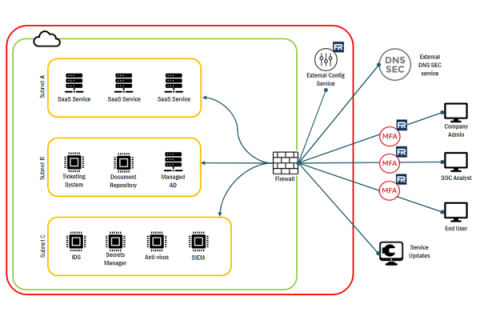
In the ever-changing world of technology, staying secure is a top priority for many organizations. Identifying and documenting system boundaries is essential for keeping data safe and secure, but what does this mean? In this article, we’ll explore system boundaries, how to identify them, and how to generate system boundary diagrams. By the end of this guide, you’ll be well-versed in understanding system boundaries and creating diagrams that can help keep your information secure!

Expanding Enterprise Attack Surfaces (EAS) and the increasing importance of Identity & Access Management

In the past five years, Enterprise Attack Surfaces (EAS) have evolved significantly. EAS refer to the various entry points that cybercriminals can exploit to gain unauthorized access to an organization's digital assets. With the increasing use of cloud-based services, the proliferation of connected devices and the growing reliance on third-party vendors, attack surfaces have become broader, more numerous and more complex.

Focusing On Productivity Helps Reduce Insider Risk

Many companies are concerned by the uptick in insider risk that’s come with the work-from-home boom. By one estimate, 58% of office workers work from home at least one day a week. This trend creates blind spots for companies. Managers see their employees less often, people work off network and on personal devices, and they keep schedules that don’t adhere to the previous more predictable hours.