In this series, you’ll hear directly from Vanta’s Security, Enterprise Engineering, and Privacy, Risk, & Compliance Teams to learn about the team’s approach to keeping Vanta — and most importantly, our customers — secure. The following post comes from our Security Team and explains our approach to threat modeling.
Yes, your WiFi provider – also called an Internet Service Provider (ISP) – can see what you search and what sites you visit, even when you’re in incognito mode. The owner of the router will also be able to see what you search in the router logs. Incognito mode only prevents your site visits from being saved to your browser history. Read on to learn more about how incognito mode works and who can see your search history.
The upcoming cybersecurity regulations from the U.S. Securities and Exchange Commission (SEC) deliver a clear message: Cyber risk is a business risk. Slated to be finalized this fall, the regulations will directly link financial performance to cybersecurity through required public disclosures. If a company is hacked, it can affect the stock price, the market capitalization, and customer trust. That is why the SEC is paying attention and has proposed these vital regulations.
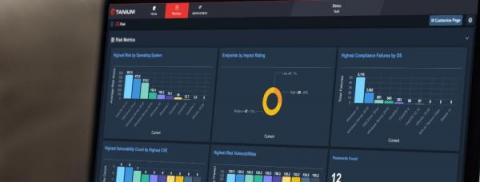
Our most recent product and feature release further secures software supply chains, extends Tanium’s single view of endpoint data to additional ARM-powered devices, and expands the capabilities of our Risk & Compliance solution.
Keeper Security partnered with Brigantia almost three years ago to focus on growing our business in the UK and Ireland MSP markets. It was an honour to re-join forces for a productive afternoon in London for an informative workshop with current partners. Brigantia’s Sales Director, Angus Shaw, and Keeper Security’s Global Channel Director, John Andrews, led the charge, with Padraigh Conway, our Lead EMEA Sales Engineer, providing detailed best practices sessions.
21 CFR Part 11 is a set of regulations issued by the U.S. Food and Drug Administration (FDA) that establishes the criteria under which electronic records and signatures are considered trustworthy, reliable, and equivalent to paper records. In order to sell products in the United States, companies must demonstrate that their systems meet the standards set forth in Part 11. This can be a daunting task, as the requirements are numerous and detailed.