Women CyberSecurity Society Targeted by Smishing Campaign

The Canada-based Women CyberSecurity Society (WCS2) has warned that its leadership, members, and volunteers are being targeted by an SMS phishing (smishing) campaign, IT World Canada reports. “A volunteer recently reported receiving a text message claiming to be from founder Lisa Kearney citing an urgent need for help,” WCS2 says.


Top 6 Hybrid Cloud Security Solutions: Key Features for 2024

Hybrid cloud security uses a combination of on-premises equipment, private cloud deployments, and public cloud platforms to secure an organization’s data, apps, and assets. It’s vital to the success of any organization that uses hybrid cloud network infrastructure. The key factors that make hybrid cloud security different from other types of security solutions are flexibility and agility.

How To Calculate Cybersecurity ROI and Communicate It to Executives

Organizational leaders have generally viewed cybersecurity as a costly yet essential business function and recognize that Chief Information Security Officers (CISOs) and other cyber leaders make strategic decisions to safeguard the company's digital assets. Still, until recently, these higher-level executives have never sought to make sense of the technical cyber activities in a broader business context, believing their value to be too complex to discern. ‍

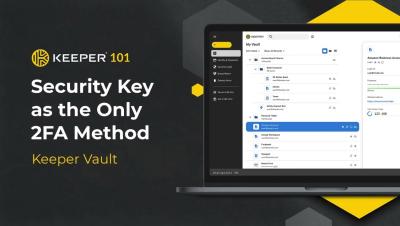
Security Key as the Only 2FA Method

Two-Factor Authentication or “2FA” provides an extra layer of security when logging into your Keeper Vault. While support for hardware security keys for 2FA is not new to Keeper, historically, users were required to have a backup method in addition to a security key. Keeper Administrators now have the ability to enforce the use of a hardware-based security key as the only two-factor method via a role enforcement policy setting.

Machine Learning in Action - An In-Depth Look at Identifying Operating Systems Through a TCP/IP Based Model

In the previous post, we’ve discussed how passive OS identification can be done based on different network protocols. We’ve also used the OSI model to categorize the different indicators and prioritize them based on reliability and granularity. In this post, we will focus on the network and transport layers and introduce a machine learning OS identification model based on TCP/IP header values.

The Digital Smile: Virtual Consultations and Teledentistry Services

In the rapidly evolving landscape of healthcare, the dental industry is embracing groundbreaking advancements that redefine the patient experience. Virtual consultations and teledentistry services have emerged as pivotal components, transforming the traditional dental visit into a more accessible and convenient process.

Demystifying Tech: Understanding All About the Internet of Things (IoT)

At its core, the Internet of Things is a powerful network transforming objects into intelligent agents through connectivity. It allows for real-time data sharing and smarter decision-making, impacting everything from home automation to industrial efficiency. This guide offers an essential primer about the Internet of Things, focusing on how IoT functions, the benefits it delivers across various spheres, and its future potential, without overwhelming you with technical details.

AI's Quantum Leap: 5 Billion Times More Powerful in a Decade! Impact on Jobs and Innovation Now

Join me as we delve into the astounding progress of today's cutting-edge AI systems, now boasting a staggering five billion times more power than a mere decade ago! In this video, we scrutinize the accelerated pace of innovation in AI, sparking a crucial conversation about the looming advent of AGI. While I'm hopeful for a later arrival of AGI, the reality might unfold sooner than expected. Let's explore the hypotheticals and the tangible impact on the employment industry in the present moment.

NYDFS Finalizes Amendments to Cybersecurity Regulations: Adapting to New Requirements for Financial Services Companies

On March 1, 2017 the Department of Financial Services (DFS) introduced a regulation, known as 23 NYCRR 500, establishing cybersecurity requirements for financial services companies. This regulation, enacted by the New York State Department of Financial Services, specifically Part 500 of Title 23 of the Official Compilation of Codes, Rules and Regulations of the State of New York (NYCRR) is commonly known as the "Cybersecurity Requirements for Financial Services Companies".