Malvertising Campaign Spreads Phony Utility Bills

A widespread malvertising campaign is attempting to trick users into paying phony utility bills, according to researchers at Malwarebytes. “We discovered a prolific campaign of fraudulent ads shown to users via Google searches,” the researchers write. “To give an idea of scale, the number of ads we found exceeds what we have found in previous malvertising cases....The scam begins when a user searches for keywords related to their energy bill.


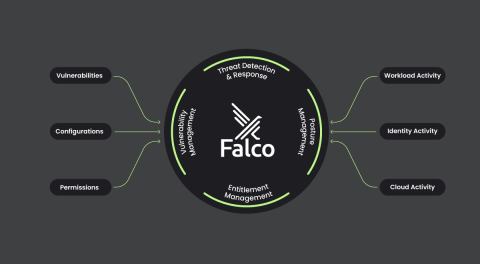
Introducing Runtime-based Vulnerability Management - turning vulnerability data into actionable intelligence

Struggling to manage vulnerabilities in your Kubernetes environment? You’re not alone. Traditional vulnerability management tools often leave security teams feeling overwhelmed and unsure of where to focus their efforts. Traditional scanners churn out an endless stream of alerts, many irrelevant, making it difficult to prioritize and address the most critical issues. Sound familiar?

#DidYouKnow? Forescout Shines a Light on Your Complex Networks!

DidYouKnow? #Forescout shines a light on your complex networks! 🔦 What do you do when the amount of unmanageable devices exceed the number of managed devices? Our CTO, Justin Foster, how we bring the light to the deepest darkest corners of your network and brings visibility and control.

IBM Tests Audio-Based Large Language Model to Hijack Live Conversations

With the idea in mind to “audio-jack” a live call-based banking transaction, security researchers were successful in inserting cybercriminal-controlled account details. Deepfake audio is nothing new… but it is getting very advanced. So much so, that security researchers at IBM Threat Intelligence were able to test out a hypothesis as to whether it’s possible to perform an audio-based “Man in the Middle” attack.

Leveraging ThreatQ and Infoblox SOC Insights for Enhanced Security Operations

Organizations face an ever-evolving array of cyber threats that require swift and intelligent responses. Security Operations Centers (SOCs) are at the forefront of this battle, tasked with detecting, analyzing, and mitigating threats to safeguard valuable assets. To bolster their defenses, many enterprises are turning to innovative solutions such as ThreatQ™ and Infoblox SOC Insights, which offer advanced capabilities for threat intelligence management and network security.

The Unsettling Leap of AI in Video Creation: A Glimpse Into Sora

In the rapidly evolving landscape of artificial intelligence (AI), the launch of Sora by OpenAI marks an unnerving milestone in video synthesis. The unveiling of such revolutionary technology is simultaneously exciting and raises red flags to the broader implications of AI's role in digital content creation and cybersecurity. The potential of Sora to generate up to one-minute video clips from mere text input is staggering.

The power of prioritization: Why practitioners need CNAPP with runtime insights

The heightened demand for cloud applications places a premium on the agility of development teams to swiftly create and deploy them. Simultaneously, security teams face the crucial task of safeguarding the organization’s cloud infrastructure without impeding the pace of innovation.

Preventing server-side request forgery in Node.js applications

Server-side request forgery (SSRF) is a common vulnerability that can crop up unknowingly in any Node.js application. It poses a significant threat because attackers can manipulate a server into making unintended requests to both internal and external resources. This article will explore SSRF, its potential risks, and the strategies to mitigate SSRF in Node.js applications.

SSH-Snake: New Self-Modifying Worm Threatens Networks

The Sysdig Threat Research Team (TRT) discovered the malicious use of a new network mapping tool called SSH-Snake that was released on 4 January 2024. SSH-Snake is a self-modifying worm that leverages SSH credentials discovered on a compromised system to start spreading itself throughout the network. The worm automatically searches through known credential locations and shell history files to determine its next move. SSH-Snake is actively being used by threat actors in offensive operations.