Network Security as a Service: Hassle-Free Cyber Protection

Cyber threats are increasing at a startling rate in today's digital environment, and by 2025, it is predicted that the yearly cost of cybercrime will have reached $10.5 trillion worldwide. From malware assaults to data breaches, businesses of all sizes must have strong network protection since security threats are always changing. But handling cybersecurity internally may be difficult, expensive, and time-consuming.

A Rose by Any Other Name: Exposure Management, a Category that Evolved from Vulnerability Management

As organizations increase their reliance on cloud services, remote work tools, IoT devices and smart infrastructures, and the use of third-party vendors, their exposure to cyber threats increases. Traditional approaches to vulnerability management are unable to keep up with rapidly changing business needs and an expanding attack surface. While scanning and patching known vulnerabilities remains critical, today’s complex threat landscape demands a more comprehensive strategy.

What is a Tailgating Attack? Understand This Sneaky Security Threat

Imagine yourself entering your office building and, as you open the door, someone appears right behind you, behaving as if they belong there. Without a doubt, you let them in because you believe they are an employee. What if, however, that individual is a malevolent intruder? This is the fundamental idea behind a tailgating attack, a social engineering technique in which an unauthorized person uses human decency and trust to enter a restricted location.

Using Exposed Ollama APIs to Find DeepSeek Models

The explosion of AI has led to the creation of tools that make it more accessible, leading to more adoption and more numerous, less sophisticated users. As with cloud computing, that pattern of growth leads to misconfigurations and, ultimately, leaks. One vector for AI leakage is exposed Ollama APIs that allow access to running AI models. Those exposed APIs create potential information security problems for the models’ owners.

AI Security is API Security: What CISOs and CIOs Need to Know

Just when CIOs and CISOs thought they were getting a grip on API security, AI came along and shook things up. In the past few years, a huge number of organizations have adopted AI, realizing innumerable productivity, operational, and efficiency benefits. However, they’re also having to deal with unprecedented API security challenges. Wallarm’s Annual 2025 API ThreatStats Report reveals a staggering 1,025% year-on-year increase in AI-related API vulnerabilities.

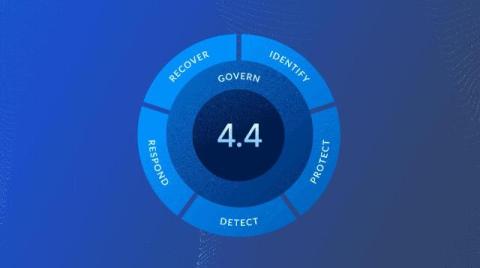
Cybersecurity Leadership in Action: Fireblocks Reaches High NIST CSF Maturity Score

As someone who has spent decades working at the intersection of cybersecurity, innovation, and operational resilience, I’ve seen firsthand how critical it is to build trust in a rapidly evolving digital landscape. At Fireblocks, that trust is not just a goal—it’s a standard we continuously push ourselves to meet and exceed.

Research Reveals Data Breaches On The Rise at UK Law Firms

British legal professionals have seen a "significant surge" in data breaches, according to new research from NetDocuments, a firm that provides a cloud-based content management platform for the legal sector. The firm has described how it analysed data from the UK regulator the Information Commissioner's Office (ICO), and discovered that the number of data breaches in the country's legal sector had grown by 39% between Q3 2023 and Q2 2024 to 2,284 cases, compared to 1,633 the same period 12 months earlier.

Top tips: How not to let dark data become a silent threat to your organization

Top tips is a weekly column where we highlight what’s trending in the tech world and list ways to explore these trends. This week, we’ll explore a few ways to identify dark data and mitigate the risks it poses. Dark data is a threat to organizations. Despite efforts to prevent it, dark data inevitably makes its way into systems and is often left unaddressed.

Role-based access control: Your organization's defense against cyberthreats

In today’s world, cyberthreats are so prevalent that they expose both public and private organizations to data breaches. A single account with excessive privileges is enough for a hacker to infiltrate the entire organization. To protect your organization from such incidents, you can delegate permissions to users based on their roles and responsibilities. This is where role-based access control (RBAC) comes in.