Tech Under Siege: Unpacking Cyber Threats in Trustwave's 2025 Risk Report

Threat actors know that technology makes the world go round, and these adversaries are more than willing to use every cyber weapon at their disposal to take advantage of that fact, according to Trustwave SpiderLabs’2025 Trustwave Risk Radar Report: Technology Sector.

Tanium + Microsoft: Real-time, actionable intelligence

In today’s threat landscape, endpoints are the frontline—and attackers are relentless. Discover how Microsoft Security Suite and Tanium combine forces to deliver a unified, AI-powered platform for real-time threat detection, Autonomous Endpoint Management (AEM), and streamlined IT operations. Tanium brings real-time actionable intelligence to the Microsoft Security Suite, so you can make immediate decisions on the current state of your IT landscape.

Switching to eBPF One Step at a Time with Calico DNS Inline Policy

Calico Enterprise lets users write network policies using domain names instead of IP addresses. This is done by dynamically mapping domain names to IP addresses and matching the egress traffic against these IPs. We have discussed this feature in detail when we introduced the Inline mode for the eBPF data plane in Calico Enterprise 3.20 release! It addresses the latency and performance issues of the various modes used by Calico in iptables/nftables data planes.

Understanding CRA Compliance: Overcoming Challenges with an Integrated Security Testing Approach

Shipping software into the EU now comes with serious strings attached. The Cyber Resilience Act (CRA), in effect since December 2024, sets strict new rules for any company offering digital products or services in the region, whether you’re a local startup or a global platform. The regulation aims to improve cybersecurity across connected devices and cloud-based software.

Inside the Early Lessons of DORA Compliance: What Works, What Fails, What's Next?

Six months into DORA — is financial services building real resilience or just ticking boxes? In this episode of Razorwire, host James Rees is joined by Richard Cassidy, Jonathan Care, and first-time guest Romain Deslorieux to dissect how the Digital Operational Resilience Act (DORA) is really playing out in financial services — beyond the policies and into the pressure.

Is Chasing the So-Called 'Best-Of-Breed' Cybersecurity Solutions Smart?

Let’s be honest: Chasing after the so-called ‘best-of-breed’ cybersecurity solutions might seem smart, but it often sets you up for operational headaches. It’s tempting—especially given the persuasive pitches from top-tier vendors—to select the best individual products for each security function.

Normalize your data with the OCSF Common Data Model in Datadog Cloud SIEM

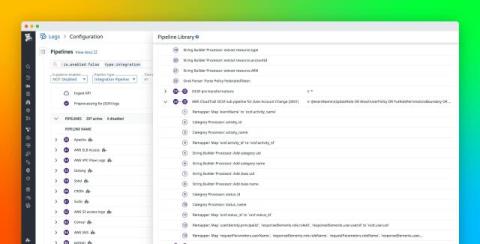
Security teams rely on SIEMs to aggregate and analyze data from a wide range of sources, including cloud environments, identity providers, endpoint protection platforms, network appliances, SaaS apps, and more. But every source delivers logs in its own format, with different field names, structures, and semantics. This fragmentation makes it difficult to build scalable, reusable detection rules or correlate threats across systems.

Europol Warns of Social Engineering Attacks

Social engineering remains a primary initial access vector for cybercriminals, according to a new report from Europol. “Social engineering, which exploits human error to gain access to systems or personal information, stands out as a prominent technique used by criminal actors in this context,” Europol says.

GDPR vs CCPA: The Differences You Need to Know

The European Union’s General Data Protection Regulation (GDPR) and the California Consumer Privacy Act (CCPA) are two essential and well-known regulations designed to protect user data. However, despite the similarities, there are major differences between them. To help you gain more clarity on GDPR vs CCPA, we will explain the similarities and differences, so you can understand more about how both can help you manage your data. Table of contents.