Security | Threat Detection | Cyberattacks | DevSecOps | Compliance

The Secure Data Layer: A Formidable Opponent Against Ransomware

When organizations are attacked by ransomware, only a little more than half are able to recover their data using a backup. This begs the question, “What about the rest? Why might they be unable to recover?” One reason may be that their backup data has been compromised. Backups are a hot target for hackers. If they can get to an organization’s backup data, they have far more leverage.

Detecting Remcos Tool Used by FIN7 with Splunk

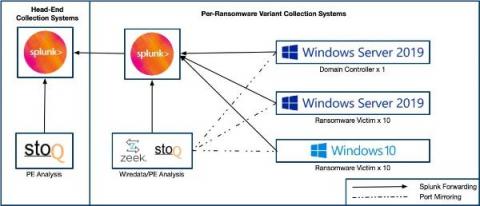
We decided to try to run a well-known Remote Access Trojan (RAT) called Remcos used by FIN7. This tool has been around for some time and has a reputation for being stealthy and effective in controlling compromised hosts. Sold as a remote computer monitoring tool, this tool has plenty of features that can allow an operator behind the control to do multiple operations against a compromised system.

As ransomware attacks rise, US government advice to protect K-12 schools is "vastly outdated"

A recently published report from the US Government Accountability Office (GAO) has warned that official security guidance from the Department of Education is out-of-date, and needs to be refreshed to address the increasing reports of ransomware and other cyber threats.

AT&T Alien Labs finds new Golang malware (BotenaGo) targeting millions of routers and IoT devices with more than 30 exploits

AT&T Alien Labs™ has found new malware written in the open source programming language Golang. Deployed with more than 30 exploits, it has the potential of targeting millions of routers and IoT devices.

10 Predictions About Cybersecurity Threats in 2022

The number of ransomware attacks continues to grow, and that trend will likely continue in 2022. Organizations will be attacked, files will be encrypted, and victims will need to decide whether to pay ransom or try to implement expensive and painful recovery techniques on their own. That much, unfortunately, should come as no surprise, but what will be different is how those attacks are carried out.

Detect & Mitigate Your Ransomware Risk with Egnyte

In this video, Egnyte’s Chief Governance Officer Jeff Sizemore & Senior Manager of Governance Marketing Neil Jones discuss recent trends in ransomware detection and how you can mitigate potential attacks. A brief demo is provided at the end, where you will learn how to recover from a ransomware attack. Ransomware attacks continue to proliferate. We want users to understand the current state of ransomware attacks and to be able to prepare for attacks and manage them more effectively.

What is a Keylogger? How they Work and How to Stop Attacks

A keylogger is a type of spyware that monitors and records user keystrokes. They allow cybercriminals to read anything a victim is typing into their keyboard, including private data like passwords, account numbers, and credit card numbers. Some forms of keyloggers can do more than steal keyboard strokes. They can read data copied to the clipboard and take screenshots of the user's screen - on PCs, Macs, iPhones, and Android devices. Keyloggers are not always the sole threat in cyberattacks.

Detecting IcedID... Could It Be A Trickbot Copycat?

IcedID is a banking trojan, it is designed to be stealthy and built to collect financial information. IcedID harvests user credentials and banking sessions to commit financial crimes, including carding, money laundering, and transferring of funds to foreign financial institutions. In recent research published by Splunk Threat Research Team (STRT) the inclusion of cryptocurrency exchange information was also included by Trickbot in the web inject code.

Malware analysis: Hands-On Shellbot malware

Malware analysis is a fundamental factor in the improvement of the incident detection and resolution systems of any company. The Sysdig Security Research team is going to cover how this Shellbot malware works and how to detect it. Shellbot malware is still widespread. We recorded numerous incidents despite this being a relatively old and known attack that is also available on open Github repositories.