Security | Threat Detection | Cyberattacks | DevSecOps | Compliance

The Latest Cybersecurity News & Insights From Around The World

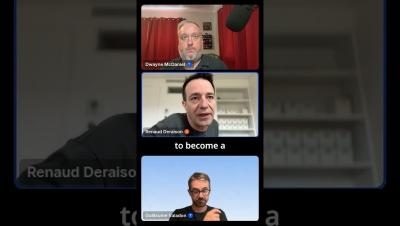

Why academic selfie fraud benchmarks fail in the real world
Academic deepfake datasets rarely static: generate an image, label it real or fake, done. Real-world fraud doesn't hold still. Zhaofeng Si, a PhD student at University at Buffalo and research scientist intern at Persona, breaks down the gap. Public academic datasets are mostly typical face swaps and diffusion-model-generated images with a fixed label. In the real world, there's an attack-and-defense loop. Fraudsters actively probe for ways to bypass detection, so defenses have to keep adapting instead of training against a static benchmark.

The five most expensive words in a startup sales call
The most expensive words in a startup sales call? We'll. Get. Back. To. You.
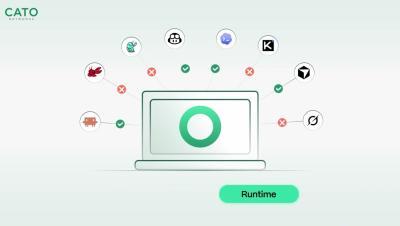
Secure Local AI Agents with Cato AI Security
Local AI agents are becoming part of everyday work, accessing enterprise data, using tools, and completing tasks directly on employee devices. Security teams need to enable this adoption without losing visibility, control, or governance over agent actions - even when those actions happen locally.

How to Remain Audit-Ready with Egnyte
Compliance regulations like CMMC, FINRA, and SEC don't pause, and neither should your audit readiness. Egnyte's Regulation-to-Audit framework is an end-to-end compliance solution that maps regulatory requirements directly to controls, artifacts, and audit-preparedness — keeping your organization compliant 24/7/365. Four powerful capabilities power this continuous compliance loop: · Sensitive Content Protection: Automatically scans, classifies, and labels regulated content across Egnyte and your connected repositories.
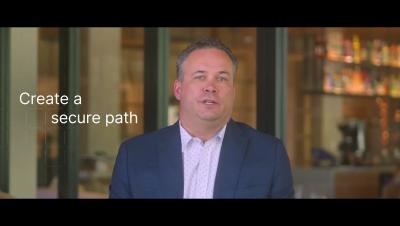
How Western Canada Lottery Corporation Is Modernizing 5,000 Retail Sites with Netskope SASE
Western Canada Lottery Corporation (WCLC) runs one of the world's most geographically dispersed retail networks: 5,000 lottery terminal locations across Manitoba, Saskatchewan, Alberta, and three northern territories. See how they replaced a fragmented multi-ISP setup with Netskope One SASE. In this 2-minute story, Adam Janssens, Director of Infrastructure and Operations, explains how WCLC: "The cost savings to move away from private connections to secure SD-WAN with Netskope is definitely multi-millions per year, which is a huge benefit to our organization and our provinces.".
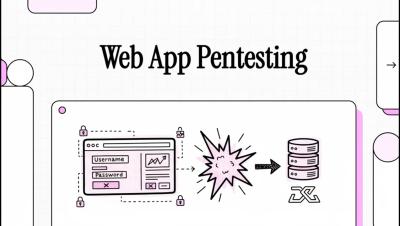
Web Application Penetration Testing - Complete Guide (2026)
Web application penetration testing means simulating real-world attacks on your web application; probing everything from input fields, APIs and auth flows to server configs and business logic to find security flaws before attackers do. In this video, you’ll learn.
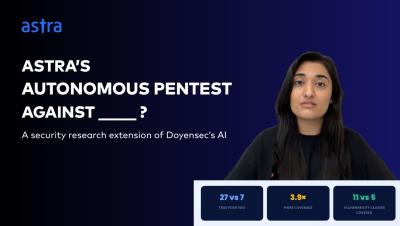
Astra's Autonomous Pentest Against Other Tool
Astra vs. Other Tool: Who Finds More Real Vulnerabilities? How does Astra Autonomous Pentesting compare with the other tool when it comes to finding real-world vulnerabilities? In this independent benchmark, Astra was tested against the other tool to evaluate vulnerability coverage, depth, and true-positive findings. The results: 27 true-positive vulnerabilities identified 3.9× more vulnerability coverage 11 distinct vulnerability classes discovered Deep testing across business logic and application behaviour.
How to Create a Hyper-V Virtual Switch | External, Internal & Private Switches
Hyper-V Virtual Switches are essential for connecting virtual machines to networks and managing communication between Hyper-V VMs, the host, and external networks. In this video, learn about the different types of Hyper-V Virtual Switches and when to use each one: External Virtual Switch – Connects VMs to the physical network Internal Virtual Switch – Enables communication between VMs and the Hyper-V host Private Virtual Switch – Enables communication between VMs on the same host.