Security | Threat Detection | Cyberattacks | DevSecOps | Compliance

Optimize Your Netskope Security Controls with Reach Security

"What's the problem, and how do I fix it?" Most security tools can't answer that. Reach can, for every misconfiguration in your Netskope deployment. It analyzes your web, SaaS, and data protection policies, flags what's drifted, and hands your team the exact fix ranked by risk and all powered by AI models. No guesswork, no 40-tab config audit.

The Howler Episode 31 - Trisha Farrow

This month, we sit down with Trisha Farrow, our Senior Vice President of People and Facilities. In this episode, Trisha Farrow shares the heart behind her leadership—why human connection, courage, and curiosity matter more than ever in a fast-changing world. From building inclusive cultures to navigating AI in HR, she offers a powerful perspective on what it really means to lead people, not just processes.

CloudCasa DR for HPE Alletra with Red Hat OpenShift - PART 1: Failover

CloudCasa orchestrates disaster recovery failover for stateful workloads across two HPE Alletra arrays running Red Hat OpenShift. In this demo, we fail over a file server application from Site A (HPE Alletra 9060) to Site B (HPE Alletra MP B10000), with CloudCasa installing its agent via a single kubectl apply, discovering both clusters and storage systems, mapping the pre-configured HPE replication relationship, and triggering consistency group failover so the workload comes back up on Site B with all data intact.

CloudCasa DR for HPE Alletra with Red Hat OpenShift - PART 2: Failback

CloudCasa completes the disaster recovery cycle by failing a file server application back from Site B (HPE Alletra MP B10000) to its original primary on Site A (HPE Alletra 9060), both running Red Hat OpenShift. In this demo, we create a reverse DR plan, scale down the workload for a clean shutdown, and let CloudCasa orchestrate the two-phase failback: an HPE recover/restore operation that reverses replication at the storage layer, followed by progressive Kubernetes resource restoration, before the file server comes back online on Site A with its data intact.

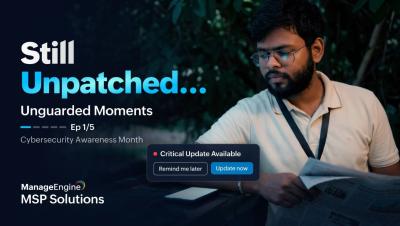
Your Patch Team Has Hours. Attackers Already Know That.

AI-assisted exploit generation has compressed the CVE-to-weaponization window from weeks to hours. Patch programs built for 15–30 day cycles are structurally mismatched to that reality—and attackers are already operating inside the gap. The only viable response: architect for assumed compromise, map unpatched paths, and validate that compensating controls are actually firing.

Ep. 63 - Mythos and ChatGPT 5.5: Why AI Now Finds Decades-Old Zero Days

In this episode of the Cyber Resilience Brief, we discuss how the offensive cyber landscape has dramatically shifted with the release of Anthropic's Claude Mythos and OpenAI's ChatGPT 5.5. Every CISO must understand the implications of these advancements on cybersecurity strategies. Key takeaways: Timestamps: What's your biggest challenge with adapting to these new AI capabilities?