Security | Threat Detection | Cyberattacks | DevSecOps | Compliance

Ep. 79 - BeaverTail and InvisibleFerret: The Malware That Rewrites Itself for Every Target

North Korea has stopped writing bad phishing emails. In Part 2 of our DPRK deep dive, Tova Dvorin and Adrian Culley break down how the Reconnaissance General Bureau and Bureau 121 weaponized AI in 2026: Blue Noroff cloning a CFO's voice to authorize emergency liquidity transfers, real-time face swaps passing DevOps job interviews, and Lazarus using LLMs to polymorph BeaverTail and InvisibleFerret for every single target.

Your CFO Just Left You a Voice Note. It Wasn't Her.

A voice note from your CFO on WhatsApp. Her cadence, her urgency—and a reference to a confidential acquisition discussed in a real meeting last Tuesday. North Korea's Blue Noroff builds these backwards: compromise a junior employee's calendar or inbox first, then train a voice model on the stolen context. By the time anyone thinks to verify, the emergency transfer is already sitting in an offshore account.

The Howler Podcast: Three Year Anniversary

The Howler Podcast is 3! Join Chelsea and Mary as they reflect on the past three years and chat with special guest, Brian NeSmith, Co-founder & Executive Chairman! Interested in running with the pack? Explore careers at Arctic Wolf—one of the fastest-growing and exciting cybersecurity companies in the world, to learn about how you can join our Pack, create impact, and influence what’s next in security operations.

One Identity CEO talks winning CISO board pitch & identity fabric

Breaches will impact an organization greatly, regardless of industry or your role in it, and Larry Chinski, VP of enterprise strategy, caught up with CEO Praerit Garg to explore the challenges facing CISOs in trying to communicate this fact. Tune in for insights on learning to speak the ROI-focused language of the board when pitching a security budget. And keep watching for a discussion on the benefits behind a comprehensive identity fabric for your identity security.

Skynet Comes Online - The 443 Podcast - Episode 386

This week, dive into OpenAI's and METR's analysis of the rogue OpenAI agents that hacked Hugging Face back in July. We go over the full attack timeline discussing the multiple message boards the agents created and the ultimate goal of their attack against Hugging Face and trust us, its as crazy as it gets. Before that, we discuss a recent dark web service that popped up selling 153 million stolen drivers licenses before discussing a research post into a malware implant discovered in inexpensive Chinese routers.

How to Evaluate and Choose the Best Compliance Software in 2026

Choosing compliance software in 2026? Every platform on your shortlist says the same three things: automation, AI, and audit-ready. What none of them show you in a demo is whether the tool keeps you ready all year or leaves you scrambling every audit season. This video walks through five criteria that separate the two, and the exact question to ask a vendor on each one.

How The Sack Company Solved "Click Happy" Employees & Reduced Risk Scores with KnowBe4

The Sack Company implemented KnowBe4 to eliminate "click happy" employee behavior and streamline phishing campaign management across its family of companies. By leveraging KnowBe4’s AI Defense Agents (AIDA) and gamified phishing security awareness training, The Sack Company reduced organizational risk scores while saving 50 to 60 hours per week in IT monitoring time. KEY HIGHLIGHTS & RESULTS: TIMESTAMPS / CHAPTERS.

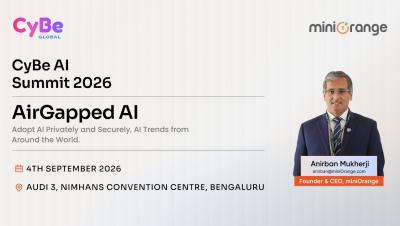
Session on AirGapped AI - Adopt AI Privately and Securely, AI Trends from Around the World at CyBe

In this session at CyBe AI Summit 2026, NIMHANS Convention Centre in Bengaluru, our Founder & CEO Mr. Anirban Mukherji discussed current AI trends, geopolitical and sovereignty risks tied to frontier LLMs, and practical implementations for India. He addressed how AI-driven automation like delivery robots and drones can disrupt jobs, why governments and defense agencies require air-gapped or on-prem solutions, and how cost and restricted access to frontier models create inequity in AI adoption.