Security | Threat Detection | Cyberattacks | DevSecOps | Compliance

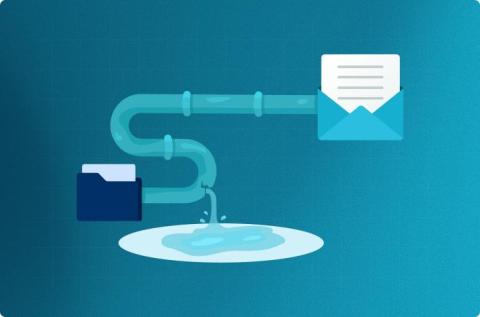
Is your phone number safe? The story of how WhatsApp nearly leaked it

Vulnerability in WhatsApp revealed billions of active accounts. Avast explains, why it’s important to keep your phone number private. When we think about protecting our personal data, we often think of our home address, passwords, or banking credentials. But a recent discovery of vulnerability in WhatsApp shows that our phone numbers deserve the same caution. For many of us, WhatsApp is the go-to app for quick communication. It's where we plan family dinners, send memes, and catch up with friends.

From reactive to resilient: Transforming infrastructure management with intelligent workflows

Infrastructure has always been the backbone of IT Operations, but its scope has expanded dramatically. Gone are the days when infrastructure meant only racks of on-premise servers and storage arrays. For many businesses, today's reality is a sprawling, interconnected landscape encompassing multi-cloud environments, modern software-as-a-service (SaaS) platforms, traditional data centers, and emerging edge workloads.

Gradual by Design: What the Cloudflare Outage Reveals About Robust SASE Architecture and Operations

On November 18, 2025, a single configuration file change at Cloudflare disrupted access to large parts of the web. Around 11:20 UTC, Cloudflare’s network began returning a surge of HTTP 5xx errors. Users trying to reach services like X (formerly Twitter), ChatGPT/OpenAI, Ikea, Canva, and many others suddenly saw Cloudflare-branded error pages instead of the applications they expected. Cloudflare mitigated the issue, restored service, and published a detailed public report.

Identity is quietly becoming the bottleneck in Automotive

Automotive programs are moving faster than many engineering teams planned for. Regulatory pressure — from UN R155/R156 (WP.29) and ISO/SAE 21434 to the forthcoming EU Cyber Resilience Act — is reshaping expectations for how identity, signing, and software integrity are managed across the entire ECU and OTA lifecycle. At the same time, SERMI is redefining workshop and diagnostic access, introducing strong authentication into processes that were previously loosely governed.

Advanced Data Tokenization: Best Practices & Trends 2025

Breaches got faster. Architectures got messier. And data stopped living in tidy tables. Modern stacks push personal and regulated data through microservices, data lakes, event streams, vector stores, and LLM prompts. Encryption still matters, but it protects containers, not behaviors. As soon as an app decrypts a record, risk comes roaring back.

Blurred Chats, Bigger Risks

Think about your digital spaces. You’ve got your corporate email, which we all treat a bit like a high-security bank vault. We approach it with caution, we're suspicious of unfamiliar senders, and we’re primed to spot a dodgy attachment. Then, you have WhatsApp. That’s the digital equivalent of your living room. It’s comfy, familiar, and filled with people you (mostly) trust. Our guard is down.

What is Just Enough Privilege? Definition, Examples, and Best Practices

Every automated workflow, microservice, and CI/CD integration needs credentials to run, but those credentials often live far longer and reach far wider than anyone intends. The result is a growing attack surface hidden in plain sight. Concerningly, 26% of organizations believe more than half of their service accounts are over-privileged. This is a staggering figure when you consider that machine identities now vastly outnumber human users by 80:1.

Modern Network Setup & DevOps Practices: Building Secure, Scalable, and Self-Healing Infrastructure

As organizations move deeper into cloud-native ecosystems, modern network setup and DevOps engineering have become the backbone of operational stability. The days of simple on-prem routers and static topologies are long gone - today's infrastructure must be dynamic, observable, secure, and ready to scale on demand. Whether a company manages microservices, hybrid-cloud workloads, or distributed remote teams, the way networks are architected matters more than ever. Even a minor misconfiguration in routing or firewall rules can cascade into downtime, security gaps, or performance loss.