Security | Threat Detection | Cyberattacks | DevSecOps | Compliance

What is vendor compliance, and why does it matter?

Modern organizations depend on a vast network of third-party vendors to deliver their products and services, often outsourcing logistics like manufacturing and customer support. While this promotes scalability and innovation, relying on external parties can create blind spots in data security, regulatory compliance, and risk management. ‍ These gaps exist because vendors often don’t operate under the same policies and ethical standards as the organization with which they collaborate.


Top 7 SQL Courses That Build Real Query Skills for Data Jobs in 2026

SQL is still the skill hiring teams test first for analyst, BI, and data engineering roles. In 2026, it is not enough to know syntax. You need to think in joins, clean logic, and readable queries that others can maintain. The correct course should push practice, not passive watching. Look for guided projects, structured exercises, and reporting style questions that match what you will do on the job.

Top 7 Cybersecurity Courses to Move into SOC, GRC, and Cloud Security Roles in 2026

Cyber risk is now a business risk. Ransomware, fraud, and data leakage can interrupt revenue, trigger regulatory exposure, and damage customer trust in days. In 2026, teams need leaders who can translate security into action. The correct course builds usable skills, not just vocabulary, across threat detection, cloud controls, and governance. Below are seven options with clear outcomes for analysts, managers, and executives who want faster career momentum this year.

The Role of Reliable IT Services in Modern Business Growth

Modern businesses run on digital rails. When those rails are reliable, teams move faster, customers stay happy, and leaders make decisions with confidence. Reliable IT services turn technology from a cost center into a growth engine - not through flashy tools, but through steady, predictable outcomes that compound over time.

Sumo Logic's 2026 Security Operations Insights report: AI, siloed tools, and team alignment

Security threats have always been expanding and evolving, but recent data shows that modern applications are more complex for security and operations than ever before. And AI is only a piece of that puzzle. To stay on top of the changing market and hear directly from security leaders on what’s really top of mind, Sumo Logic surveyed over 500 security leaders with the help of UserEvidence. We asked about data pipelines, tool sprawl, confidence in SIEM, and, of course, AI.

CVE-2026-22610: Angular Template Compiler XSS Vulnerability Enabling Client-Side Script Execution

Angular applications often rely on built-in protections to handle user input safely. However, a recently disclosed vulnerability shows how gaps in this trust can lead to client-side attacks when input is not properly handled. The vulnerability lies in Angular’s template sanitization logic, where improper handling of SVG elements during template compilation allows attackers to execute arbitrary JavaScript in a user’s browser.

DSPM vs. DLP: Choosing the Right Data Security Strategy for Your Organization

In today's complex, perimeter-less data landscape, executives and security leaders face a critical question: how do we protect sensitive data everywhere it lives and moves without interrupting vital business operations? As organizations adopt cloud services, SaaS applications, remote work models, and AI-driven tools, data is no longer confined to a single environment or security boundary; it has become more complex to protect effectively.

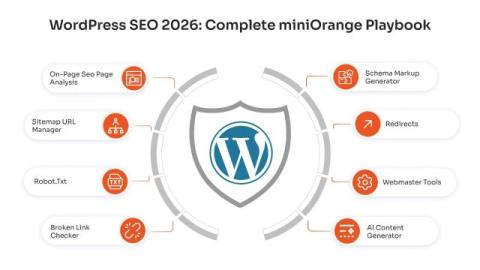
WordPress SEO 2026: Complete miniOrange Playbook

In 2026, SEO isn't just keywords; it's surviving AI Overviews, voice search, and zero-click results. In the previous blog, we saw the fundamentals of SEO (what SEO is, why it matters, and how search engine work). This guide delivers WordPress-specific tactics to rank in the AI era, using an SEO plugin.

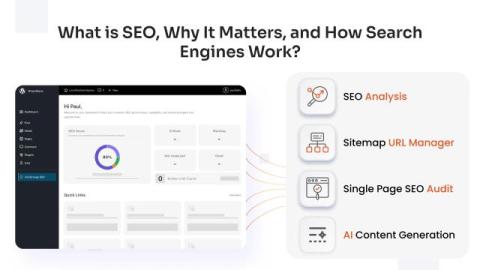
SEO 101: What is SEO, Why It Matters, and How Search Engines Work?

Search Engine Optimization (SEO) helps websites rank higher on search engines and perform better. Users tend to check the sites present on the first page of the search engines, rather than the subsequent pages. So, in order to rank on the first page, businesses must have a solid SEO tactic and strategy. In the blog, we will cover the basics of SEO, why it matters in today’s world, and how search engines work, so you can prepare an effective strategy for your organization.

Why Kubernetes Flat Networks Fail at Scale-and Why Your Cluster Needs a Security Hierarchy

Kubernetes networking offers incredible power, but scaling that power often transforms a clean architecture into a tangled web of complexity. Managing traffic flow between hundreds of microservices across dozens of namespaces presents a challenge that touches every layer of the organization, from engineers debugging connections to the architects designing for compliance. The solution to these diverging challenges lies in bringing structure and validation to standard Kubernetes networking.