Security | Threat Detection | Cyberattacks | DevSecOps | Compliance

Best Tools to Automate PCI DSS 4.0.1 Compliance for Websites in 2025

PCI DSS 4.0.1 compliance becomes manageable once you recognize that each tool protects a different layer, and the strongest programs combine them thoughtfully. With Requirements 6.4.3 and 11.6.1 now bringing the browser into focus, organizations can finally see the complete picture they need.

AI Privacy and Security: Key Risks & Protection Measures

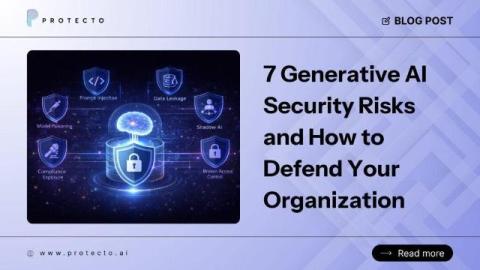
AI systems learn from vast amounts of data and then generalize. That power is useful and also risky. Sensitive data can slip into prompts. Proprietary datasets can be memorized by models. Attackers can steer models to reveal secrets or corrupt results. Meanwhile, your company is probably experimenting with multiple AI tools at once. That creates hidden data flows and inconsistent controls. “Traditional” app security isn’t enough.

Evasive Malware Surges 40% in WatchGuard's Latest Internet Security Report

Cybercriminals are taking stealth to new levels. According to WatchGuard Technologies’ latest Internet Security Report, evasive malware attacks jumped 40% in Q2 2025, driven by a sharp rise in threats delivered over encrypted connections. While Transport Layer Security (TLS) encryption is essential for protecting users, attackers are increasingly exploiting it to conceal malicious payloads and evade traditional detection methods.

The Role of Tabletop Exercises in IR Planning

Stopping a cyber incident and restoring operations requires more than technology — it depends on having the right plans, people, and processes working together under pressure. Effective incident response (IR) readiness helps position your organization to act with precision to contain threats, prevent escalation, and return to normal operations quickly. A cornerstone of a mature IR strategy is the tabletop exercise.

Brazilian Caminho Loader Employs LSB Steganography and Fileless Execution to Deliver Multiple Malware Families Across South America, Africa, and Eastern Europe

Arctic Wolf Labs has identified and analyzed a new malware loader we’re calling Caminho, a Brazilian-origin Loader-as-a-Service (LaaS) operation employing Least Significant Bit (LSB) steganography to conceal.NET payloads within image files hosted on legitimate platforms.

API Security: Challenges for a Secure Digital Frontier

Organizations continue their digital transformation, with APIs now serving as the main communication links between applications, platforms, services, and partners. The widespread use of APIs introduces new security risks despite their common presence. The growing number of APIs significantly increases the cyber risks that security teams must address as they keep up with technological advances.

What You Should Know About the CloudCasa October 2025 Feature Update

The latest CloudCasa Feature Update introduces a range of powerful new features and improvements that every user should know about. This release delivers major advancements in Kubernetes disaster recovery and backup flexibility, helping organizations recover faster, simplify management, and protect workloads across diverse environments.

Ransomware Reality: Business Confidence Is High, Preparedness Is Low

Every organization faces ransomware, but not every organization is prepared to handle it. The CrowdStrike State of Ransomware Survey explores the substantial gap between confidence in global businesses’ ransomware readiness and their actual preparedness — a gap poised to grow as adversaries use AI to launch faster, stealthier attacks.

New User Experience Transforms Interaction with the Falcon Platform

Security teams face overwhelming complexity. Enterprises employ a multitude of security tools, each with its own console, siloed data, and disconnected workflows that slow investigations and increase risk. This fragmentation is especially dangerous as adversaries grow faster and smarter and pursue cross-domain attacks.

CVE-2025-6515 Prompt Hijacking Attack - How Session Hijacking Affects MCP Ecosystems

JFrog Security Research recently discovered and disclosed multiple CVEs in oatpp-mcp – the Oat++ framework’s implementation of Anthropic’s Model Context Protocol (MCP) standard. Among these, CVE-2025-6515 stood out due to its potential threat of hijacking MCP session IDs. Within the context of MCP we’ve dubbed this new attack technique “Prompt Hijacking“. Your browser does not support the video tag.