Security | Threat Detection | Cyberattacks | DevSecOps | Compliance

Cloud Testing Challenges

Cloud testing is the process of validating applications, services, and databases that are hosted on cloud platforms. It involves verifying configurations, scalability, workloads, security controls, etc., to ensure that they perform as expected under different conditions. Cloud testing also provides a platform for performance testing and load testing before and during production in order to monitor any changes made to the system.

Prevent Credential Exposure in Code

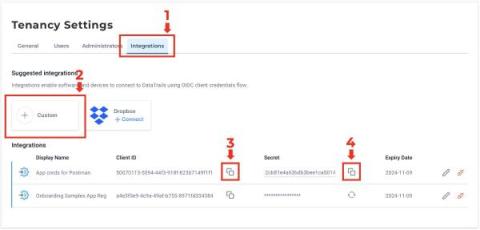
In today’s software development world, developers rely on numerous types of secrets (credentials), to facilitate seamless interaction between application components. As modern applications become more complex and require authentication for services and dependencies, the practice of hardcoding secrets during software development is on the rise.

Spoofing? Why You Should Fear This Goofy Word

Cybersecurity is a major concern in today’s digital world. Cybercriminals are constantly trying to bypass security measures and harvest sensitive information from their victims. Spoofing is one popular form of identity theft that has recently been adopted by attackers. It plays on human psychology and fools the victims into trusting the attackers with sensitive information or access to networks and devices.

More than 45K Students Lose Data in NYC Dept of Education Breach

The NYC Department of Education manages all the public schools throughout the New York City metro area. More than 1.1 million students go to the managed schools, and the organization oversees all this activity while handling data for these students. The NYC Dept of Education was recently involved in a data breach connected with the MOVEit file transfer solution, and that data breach could have resulted in substantial data losses for faculty members and students in the districts.

The Devil's in the Data

The pandemic highlighted the fragility of the global supply chain ecosystem. Now every company is striving to ensure they will never be crippled by unforeseen supply chain issues. Mentions of “supply chain” in US SEC-filed annual reports more than doubled from 2019 to 2021 to nearly 5,000 as chief supply chain officers were reluctantly escorted into boardroom discussions to explain the business risk to their company.

New Mobile Banking Malware Impersonating Messaging Apps

Following our research regarding the abuse of Malvertising using Malicious Ads, Cyberint has uncovered a new strain of mobile banking malware. This malware is being distributed on third-party APK sites and is disguised as advertisements for popular messaging applications like KIK and Viber. Our Cyberint team has conducted an analysis of the malware’s source code. Based on our findings, it appears that the campaign is primarily targeting Asia.

API Security: Navigating the Threat Landscape

An Application Programming Interface (API) is an essential and ubiquitous software that allows the exchange of information between day-to-day applications and processes, such as Software as a Service (SaaS) applications, Internet of Things (IoT) devices, universal profile login pages, and autonomous vehicles. APIs synchronize and maintain the data exchange between clients and servers, responding to each request.

Is the CMMC 2.0 Rollout on the Horizon?

The Department of Defense (DoD) introduced the Cybersecurity Maturity Model Certification (CMMC) in 2019. This framework outlined a series of security standards contractors must meet to win DoD contracts, so it’s a big concern for many companies. However, four years later, the Cybersecurity Maturity Model Certification rollout has yet to take effect. Part of this delay comes from the fact that the DoD has revamped the CMMC.

5 Essential Elements of a Municipal Cyber Security Plan

Cyberattacks on state and local governments are on the rise. In 2020, more than 100 government agencies, including municipalities, were targeted with ransomware – an increasingly popular attack vector. Recently, average down time from cyber attacks on these targets is 7.3 days and results in an average loss of $64,645. These incidents are costly and disruptive. Most state cybersecurity budgets are a paltry 0% to 3% of their overall IT budget on average.