Security | Threat Detection | Cyberattacks | DevSecOps | Compliance

The Biggest DevSecOps Hits From swampUP 2021

In the wake of recent events like the SolarWinds hack and the White House executive order on cybersecurity, DevSecOps and security are top-of-mind for most DevOps and security professionals. How to efficiently adapt or adopt a sound DevSecOps practice has become a priority, especially with the U.S. government’s impending mandate requiring software applications to be vetted, and to create a trusted Software Bill Of Materials (SBOM) for each one.

Getting started with Snyk for secure Java development

If you’re a Java developer that wants to develop your applications more securely, you’ve come to the right place. Snyk can help you with that mission. This article will explain how to begin with Snyk for secure Java development so you can be more secure from the get-go. If you’re new to Snyk, it’s important to know that we offer a variety of developer-focused products and tools. Some of these tools, like our CLI and some IDE integration, support multiple products.

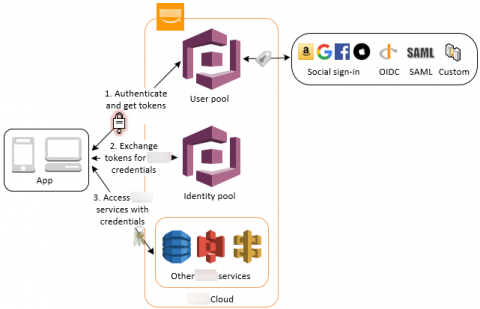
How does AWS IAM role, STS and Identity Pool work with each other.

We talked about IAM in the past 3 posts, identities in IAM, manage users privilege as an IT person and control privilege boundaries. We also talked about how applications use AWS Cognito Identity Pool to get AWS temporary credentials to access AWS resources in early posts of “What I wish I could have learned before starting using AWS Cognito” and “Authentication and authorization with AWS Amplify under the hood”.

Drive DevSecOps Visibility with JFrog Partner Integrations

If you need your teams to act, you need to alert them where they’re already looking. Yet yesterday’s DevOps practices demand individuals to wrangle with uncorrelated events, multiple UIs, and siloed technologies. Tomorrow’s DevOps must enable teams with: To practice DevSecOps, you’ll need to know where a vulnerable build has been deployed into production, and where to find the corrected build that should replace it.

Freeze policy - Make your private registry read-only to prevent changes

Guide on how to use Bytesafe Freeze policy to control the open source software versions to what's available in an npm registry. Want to get consistent results when using npm install? Use Freeze and lock available dependencies to the ones you selected and approved. Consistent results, regardless of who runs the installation of dependencies, when in time and regardless of the environment or system.

Security wins by starting out with Static Code Analysis for JavaScript projects

Writing quality code is something all of us developers strive for, but it's not an easy task. Secure coding conventions have long been an aspiring goal for many developers, as they scour the web for best practices, and guidelines from OWASP and other resources. Some developers may have even tried using static code analysis to find security issues, like the use of linters (ESLint), only to find out that they are brittle and report on many false positives.

Snyk Container is now an extension in the AWS CloudFormation Registry

Snyk is excited to announce the general availability of Snyk Container as an officially supported and published extension in the AWS CloudFormation Registry! The CloudFormation Registry lets you manage the extensions that are available for use in your CloudFormation account. Public third-party extensions, like Snyk Container, are made available in the registry for use by all CloudFormation users alongside those published by Amazon and must be activated before use on your account.

JFrog CloudFormation Modules Make Provisioning to AWS Easy and Secure

A routine cloud operations task should have a routine solution. That’s why we’ve just made it a lot easier to install and maintain self-hosted instances of the JFrog DevOps Platform on AWS, through AWS CloudFormation. To further simplify the effort of self-hosting Artifactory and Xray on AWS, we’ve just published a set of AWS CloudFormation modules to the AWS CloudFormation Public Registry.