Security | Threat Detection | Cyberattacks | DevSecOps | Compliance

The Missing Link in OWASP is Found: Business Logic Abuse#owasp #owasptop10 #businesslogic

For years, security lists focused on technology (Cloud , Mobile , Serverless ). We desperately needed a list that focused on the core problem: flawed application logic, regardless of the stack. The OWASP Top 10 Business Logic Abuse (BLA) list fills that critical, architectural gap. Why? Because exploitation often happens between technologies, not within them. We must be able to categorize and talk about these intricate logic threats in a technology-agnostic way.

Solving Al Agent Sprawl: API Governance Across Multi Gateway Environments

As organizations accelerate adoption of AI agents, autonomous workflows powered by LLMs and MCP servers are rapidly proliferating across internal systems, partner networks, cloud environments, and API gateways. The result? A sprawling, often invisible attack surface: shadow APIs, duplicate endpoints, context drift, unmanaged agent access, inconsistent policies, and risk of data exposure or compliance failures.

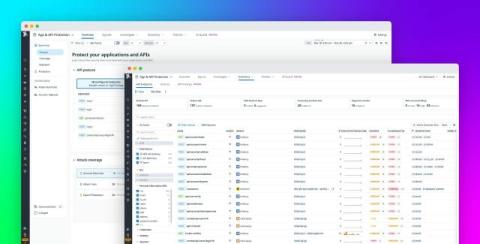
Secure your APIs at the edge with Datadog App and API Protection

Modern applications are constantly exposed to various malicious activities, including credential stuffing, API abuse, and advanced injection attacks. Many of these threats can be stopped at the network edge, before they ever reach your application. That’s why Datadog App and API Protection offers real-time threat detection and blocking for popular edge proxies and load balancers, which include integrations for Envoy, Istio, NGINX, and Google Cloud Load Balancers (using Google Service Extensions).

Stateless vs. Stateful: The Difference in Cyber Attacks #StatefulAttack #businesslogic #apisecurity

The Hacker is Having a Conversation with Your API. There are two kinds of attacks you MUST understand: Stateless (Brute Force): One-and-done, instant gratification. Think SQL Injection. Stateful (Sophisticated): A persistent conversation over time. This is the signature of Business Logic Abuse. Why does this matter? Stateful attacks are executed by sophisticated threat actors who have done their due diligence on your architecture. You must evolve your defenses to monitor the entire session, not just single requests!

Obscure MCP API in Comet Browser Breaches User Trust, Enabling Full Device Control via AI Browsers

SquareX released critical research exposing a hidden API in Comet that allows extensions in the AI Browser to execute local commands and gain full control over users' devices. The research reveals that Comet has implemented a MCP API (chrome.perplexity.mcp.addStdioServer) that allows its embedded extensions to execute arbitrary local commands on users' devices, capabilities that traditional browsers explicitly prohibit. Concerningly, there is limited official documentation on the MCP API.

APIs Are the Retail Engine: How to Secure Them This Black Friday

Can you ever imagine the impact on your business if it went offline on Black Friday or Cyber Monday due to a cyberattack? Black Friday is the biggest day in the retail calendar. It’s also the riskiest. As you gear up for huge surges in online traffic, ask yourself: have you protected the APIs on which the business runs?

When your AI Assistant Becomes the Attacker's Command-and-Control

Earlier this month, Microsoft uncovered SesameOp, a new backdoor malware that abuses the OpenAI Assistants API as a covert command-and-control (C2) channel. The discovery has drawn significant attention within the cybersecurity community. Security teams can no longer focus solely on endpoint malware. Attackers are weaponizing public and legitimate AI assistant APIs and defenders must adjust.

Hacked Architecture, Not Code: What is a Business Logic Attack? #businesslogic #cybersecurity

Why do hackers ignore your firewalls and clean code? Because they exploit your business logic and application architecture. A Business Logic Attack (BLA) is a sophisticated manipulation that uses your own system's design against you. Learn the key difference between code flaws and architectural exploits.

From Cloud to Code: Salt Cloud Connect Now Scans GitHub

One of our most-loved features is Salt Cloud Connect. In a world of complex deployments, it’s a breath of fresh air: an agentless discovery model that delivers under 10-minute deployment and rapidly gathering API-specific info in cloud platforms. Customers plug it in, and in minutes, not weeks, they get a “traffic-free”, complete inventory of their APIs across AWS, Azure, GCP, Kong, and Mulesoft. This “ease of use” provides a “wow” moment of immediate visibility.