Security | Threat Detection | Cyberattacks | DevSecOps | Compliance

Update on React Server Components RCE Vulnerability (CVE-2025-55182 / CVE-2025-66478)

The attack landscape has been dynamic following the disclosure of the React Server Components RCE vulnerability. New information has emerged regarding the initial Proof-of-Concept exploit, as well as improved detection methods, exploitation mechanics observed in the wild, and rapidly growing attack activity. This update summarizes the changes and observations we have made across Wallarm customers.

Agentic AI Security: The Emerging Fourth Pillar of Cybersecurity

For decades, cybersecurity has been organized around three dominant pillars: endpoint security, network security, and cloud security. These domains have shaped technology categories, vendor ecosystems, and enterprise budgets. They have matured into multi-billion-dollar markets, each responding to successive waves of digital transformation. However, a tectonic shift is underway.

API Security vs Application Security: What's the Difference & Best Practices 2026

Over the past few years, APIs have quietly become the front door to your most critical data and workflows, flipping security ownership on its head. Accountability and ownership of both API and Application security have shifted from your central infra and network teams to product, platform, and engineering squads that ship new APIs every week, and well, sometimes every day. This is where CISOs and CTOs feel the tug strengthening from both sides.

Critical vLLM Flaw Exposes the Soft Underbelly of AI Infrastructure

While the world worries about "jailbreaking" LLMs or preventing them from hallucinating, a critical new vulnerability has just reminded us of a fundamental truth: AI is just software, and software has bugs. A newly discovered critical flaw (CVE-2025-62164) in vLLM, one of the most popular libraries for serving large language models, allows attackers to achieve Remote Code Execution (RCE) or crash servers simply by sending a malicious API request. This isn't a failure of the AI model.

The Most Dangerous Blind Spot in SaaS Architecture #saas #saassecurity #cloudsecurity #apisecurity

When data flows between two critical SaaS tools (like Salesforce and a CRM chatbot), you have zero visibility into that traffic. This leaves a gaping hole for attackers to exploit Business Logic Abuse. Since you can't see the traffic, you cannot monitor the attack. The Solution? Rigorous Vendor Management. Control Your Own Keys! The responsibility to protect your sensitive data is always yours, even in the cloud.

Wallarm Halts Remote Code Execution Exploits: Defense for Vulnerable React Server Component Workflows

On December 3, 2025, React maintainers disclosed a critical unauthenticated remote code execution (RCE) vulnerability in React Server Components (RSC), tracked as CVE-2025-55182. A working PoC was released publicly, and Wallarm immediately began observing widespread exploitation attempts across customer environments.

APIs are the Language of AI. Protecting them is Critical.

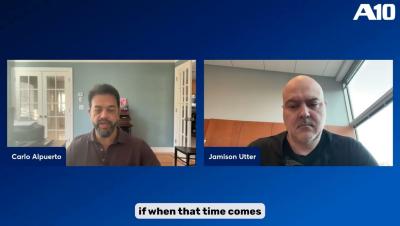
APIs are the Language of AI. Protecting them is Critical. In this discussion, A10 Networks security experts Jamison Utter and Carlo Alpuerto explore the emerging impact of Agentic AI on the API security landscape. They delve into how AI agents, as new API consumers, are driving an explosion in endpoints and exacerbating existing security issues, pushing API protection higher up the security practitioners' priority list.

Securing the New AI Edge: Why Salt Security Is Bringing MCP Protection to AWS WAF

The definition of the "edge" is changing. For years, security teams have focused on the traditional perimeter: web applications, public APIs, and user interfaces. We built firewalls, deployed WAFs, and established strict access controls to keep bad actors out. But with the rapid adoption of Agentic AI, the perimeter has expanded. Today, your "edge" isn't just where users connect to your apps; it's where AI agents connect to your data.