From ChatGPT to DALL-E to Grammarly, there are countless ways to leverage generative AI (GenAI) to simplify everyday life. Whether you’re looking to cut down on busywork, create stunning visual content, or compose impeccable emails, GenAI’s got you covered—however, it’s vital to keep a close eye on your sensitive data at all times.
The past three months witnessed several notable changes impacting privacy obligations for businesses. Coming into the second quarter of 2023, the privacy space was poised for action. In the US, state lawmakers worked to push through comprehensive privacy legislation on an unprecedented scale, we saw a major focus on children's data and health data as areas of concern, and AI regulation took center stage as we examined the intersection of data privacy and AI growth.
As GenerativeAI expands its reach, the impact of software development is not left behind. Generative models — particularly Language Models (LMs), such as GPT-3, and those falling under the umbrella of Large Language Models (LLMs) — are increasingly adept at creating human-like text. This includes writing code.
Threat actors are constantly looking for new ways or paths to achieve their goals, and the use of Artificial Intelligence (AI) is one of these novelties that could drastically change the underground ecosystem. The cybercrime community will see this new technology either as a business model (developers and sellers) or as products to perpetrate their attacks (buyers).
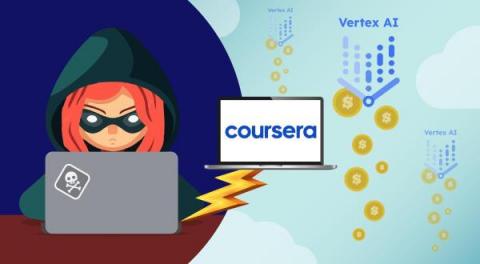
The Sysdig Threat Research Team (Sysdig TRT) recently discovered a new Freejacking campaign abusing Google’s Vertex AI platform for cryptomining. Vertex AI is a SaaS, which makes it vulnerable to a number of attacks, such as Freejacking and account takeovers. Freejacking is the act of abusing free services, such as free trials, for financial gain. This freejacking campaign leverages free Coursera courses that provide the attacker with no-cost access to GCP and Vertex AI.