Security | Threat Detection | Cyberattacks | DevSecOps | Compliance

Supercharge Your AI Data Governance with Riscosity's F5 BIG-IP SSL Orchestrator Integration

Artificial intelligence has stormed the enterprise world, and it's not slowing down anytime soon. With thousands of AI-powered applications, from large language models (LLMs) to productivity-boosting copilots, employees are tapping into AI to work smarter and faster. But here’s the rub: while AI can supercharge productivity, it also brings along a Pandora’s box of risks.

Agentic AI in Cybersecurity: Real-World Impact & Strategic Insights

In this webinar, the Securonix team breaks down how agentic AI is transforming cybersecurity from theory into measurable results. Hear directly from our experts on the Response Agent and other AI-driven capabilities that help modern SOCs detect threats faster, cut through alert fatigue, and deliver outcomes that boards can trust. What you’ll learn: This session is packed with real-world examples and strategic guidance for CISOs, SOC leaders, and analysts who want to modernize security operations, demonstrate ROI, and prove resilience in the boardroom.

DAGStyle Agents That Finish Jobs

When I first built a chat-based AI agent, I was amazed by its conversational abilities. It could answer questions and generate code snippets on the fly. Yet when I tried to delegate complex work (like analysing a set of documents), it kept wandering off course. Sometimes it hallucinated, sometimes it looped forever, and sometimes it burned through API credits without a single useful output.

AI vs. Human: What SpamGPT Means for the Future of Security

Phishing is not new. But SpamGPT has changed the game by showing how AI can industrialize deception at scale. SpamGPT has quickly become the poster child for how attackers are using AI to industrialize old tricks. At its core, SpamGPT isn’t introducing a new kind of attack; it’s simply making phishing faster, cheaper, and more convincing. Phishing has always been about deception. But with AI generating endless, polished, and context-aware lures, the balance of power shifts.

Is AI really new-or just automation with better branding?

“AI is just automation by a different name.” It’s a bold claim—but one that Brandon Heller, CTO and co-founder of Forward Networks, and Howard Holton, CEO of GigaOm, unpack in a way that will make you think. In their recent conversation on Discovering Disruptions in Tech, they make the case that artificial intelligence, especially generative AI, is not delivering brand-new capabilities.

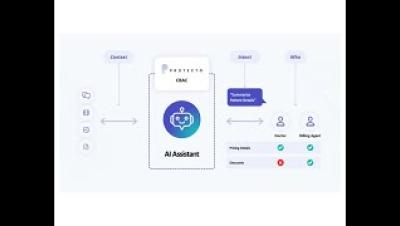
Still Using RBAC in AI? You're Already Behind.

Traditional role-based access control (RBAC) was built for structured systems - not for the messy, unstructured data that powers today’s AI workflows. In this video, we explore real-world healthcare scenarios where RBAC breaks down like mental health notes, lab results, and substance use histories buried in clinical documents. You’ll see how Protecto’s Context-Based Access Control (CBAC) solves this by understanding the user, prompt, and context - and enforcing policies in real time, without breaking AI functionality.

AI Meets SAST - Reimagining the Future of Static Analysis | Webinar Mend.io

Join host Tony Morbin as he explores how AI is revolutionizing Static Application Security Testing (SAST) in this future-forward episode with Saoirse Hinksmon, Senior Product Marketing Manager at Mend.io, and Amir Shahmir, Senior Sales Engineer at Mend.io. This isn’t your average security webinar — it’s a deep dive into the convergence of AI and SAST, uncovering how GenAI is making static analysis faster, smarter, and more actionable for developers and AppSec teams alike.

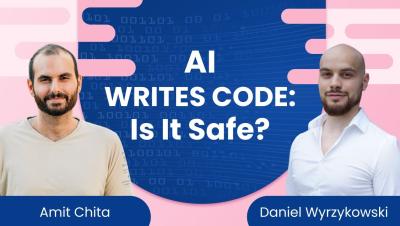
AI Is Writing the Code - Can Security Keep Up? | How to Secure Agentic IDEs from Dev to CI/CD | Mend

AI coding agents are exploding in use—but are they quietly shipping exploitable code? In this webinar, we break down real data, real incidents, and a practical blueprint for securing AI-accelerated development.

AI Data Privacy Trends and Future Outlook 2025

AI is now woven into everyday work. Customer teams rely on chat assistants, developers use copilots, and analysts ask models to sift through knowledge bases. The biggest shift in 2025 is not a single law or headline. It is the move from occasional audits to continuous, technical controls that run wherever data flows.