Security | Threat Detection | Cyberattacks | DevSecOps | Compliance

Prompt Injection Attacks in LLMs: Complete Guide for 2026

In February 2023, a Stanford University student conducted a study that turned into one of the most widely followed security tests in AI history. Kevin Liu performed a simple prompt-injection attack, tricking Microsoft Bing Chat into disclosing its internal codename, Sydney, and exposing the entire list of its system prompts. The attack utilized no high-end toolkit, no zero-day, and no privileges, only specially crafted natural language.

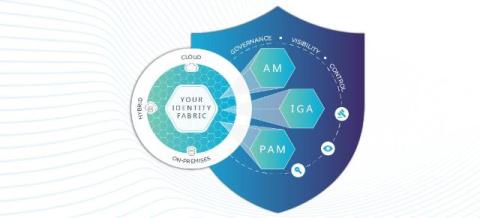
AI in IAM: How much value is it really providing?

Let’s face it, AI is everywhere now. It has moved from novelty to necessity, reshaping the way we work, make decisions and secure our organizations. It guides how we plan trips, shop for essentials and discover information – but one of its most profound impacts is happening across enterprise environments.

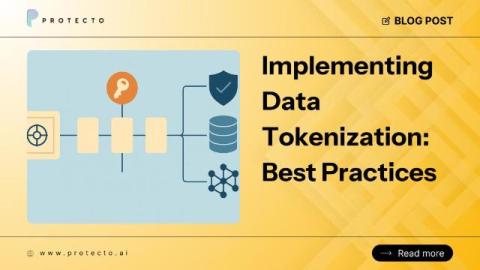
Best Practices for Implementing Data Tokenization

Data is no longer confined to a few clean relational systems. It now flows through microservices, data lakes, event streams, vector databases, and LLM pipelines. Sensitive information spreads quickly, and once it reaches ungoverned surfaces—logs, analytics exports, embeddings—it becomes extremely painful to unwind. Tokenization is one of the few controls that can both minimize data exposure and preserve business functionality.

The Mythical 1+1=3 Model in Cybersecurity

The mythical 1+1=3 model in security? It happens when the tools you already own stop working in isolation — and start working as a system. Jay Wilson and Garrett Hamilton dig into why Reach’s platform approach matters: not just enhancing individual controls, but creating compounding value across identity, endpoint, email, and network. When visibility, configuration, and enforcement align, the outcome isn’t incremental — it’s exponential.

APIs are the Language of AI. Protecting them is Critical.

APIs are the Language of AI. Protecting them is Critical. In this discussion, A10 Networks security experts Jamison Utter and Carlo Alpuerto explore the emerging impact of Agentic AI on the API security landscape. They delve into how AI agents, as new API consumers, are driving an explosion in endpoints and exacerbating existing security issues, pushing API protection higher up the security practitioners' priority list.

Indirect Prompt Injection Attacks: A Lurking Risk to AI Systems

The rapid adoption of AI has introduced a new, semantic attack vector that many organizations are ill-prepared to defend against: prompt injection. While many security teams understand the threat of direct prompt injection attacks against AI agents developed by their organizations, another more subtle threat lurks in the shadows: indirect prompt injection attacks.

Why AI Security Requires Context: Introducing Issues & the Correlation Agent

Data is never the problem. Security teams rarely complain about having too much of it. The real danger comes from data that sits unconnected and unexplained. What teams actually need is data that is actionable and converges into meaning. Data that cuts deeper than surface level signals. Data that reveals what is unfolding and what needs to happen next.

Safe Harbor: An Open Source "Abort Mission" Button for Your AI Agent

AI agents are increasingly connecting to more systems and workflows. They read structured data, follow multi-step instructions, and can reach deep into applications and developer environments. The same capabilities that make them powerful also create new opportunities for attackers. As Zenity Labs continued to study these emerging attack classes, we noticed a pattern starting to appear.